By Mary Leigh
[from fall 2026 newsletter]
Skip the Fall Cleanup!
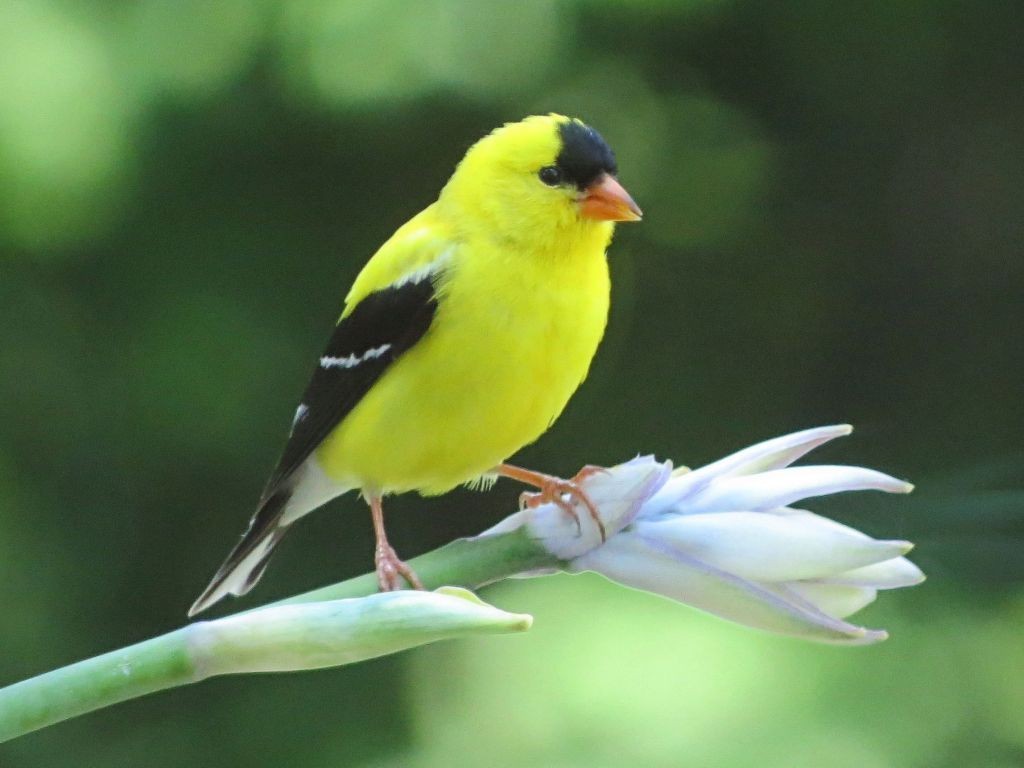
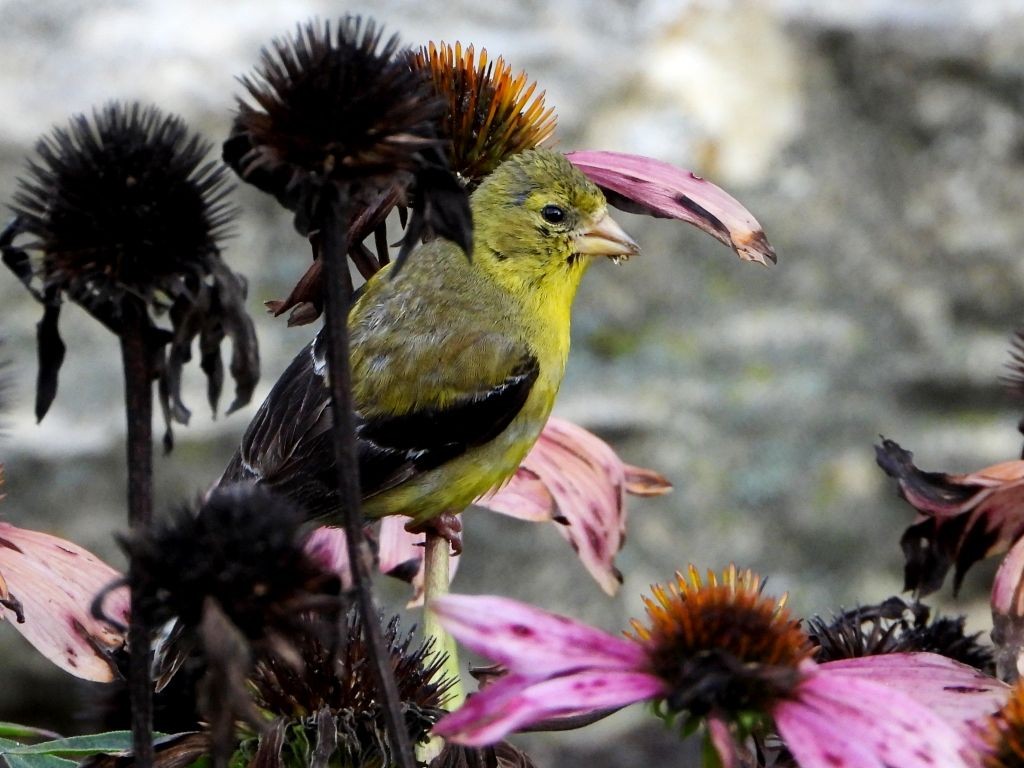
Kari’s article on gardening reminded me of the related topic of garden cleanup. Something like 25 years ago, my husband and I didn’t get around to trimming back our flowers in the fall, which was generally considered the thing to do at the time. This occurrence led to 3 surprises. First, that winter, I noticed a bunch of little birds feasting on the Black-eyed Susans we hadn’t cut back! Second, I took a closer look and was surprised to see they were American Goldfinch. I had only noticed them in the summer and assumed they migrated. I remember finding it odd that they were all females, but I’ll follow up on that observation later.
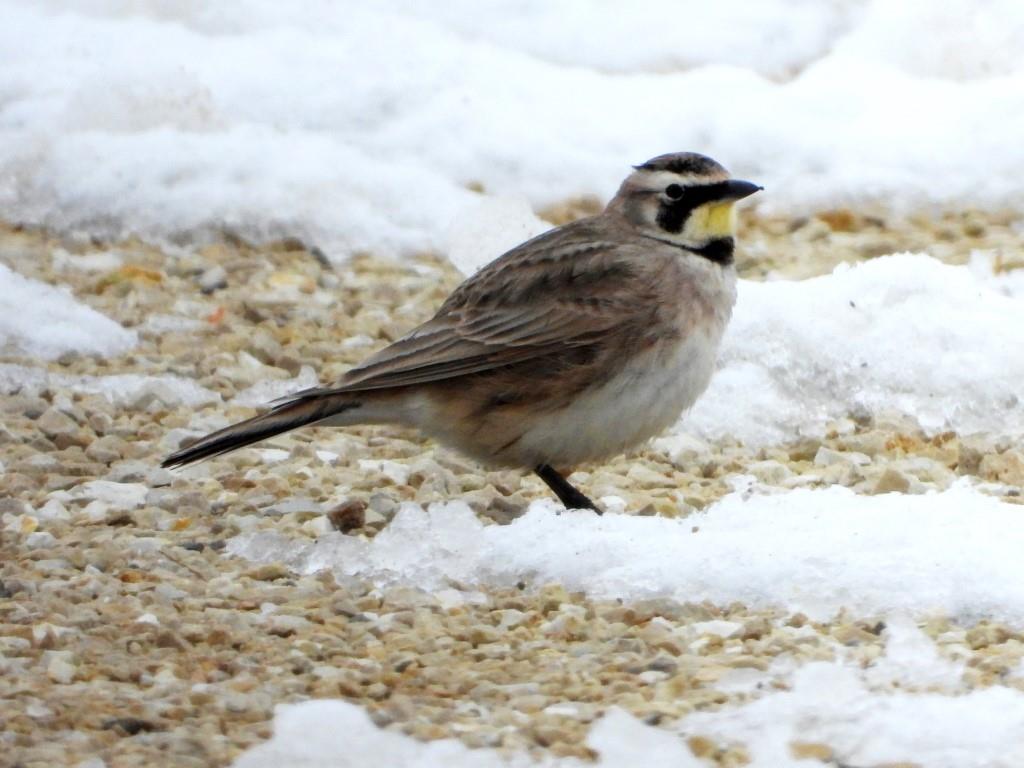
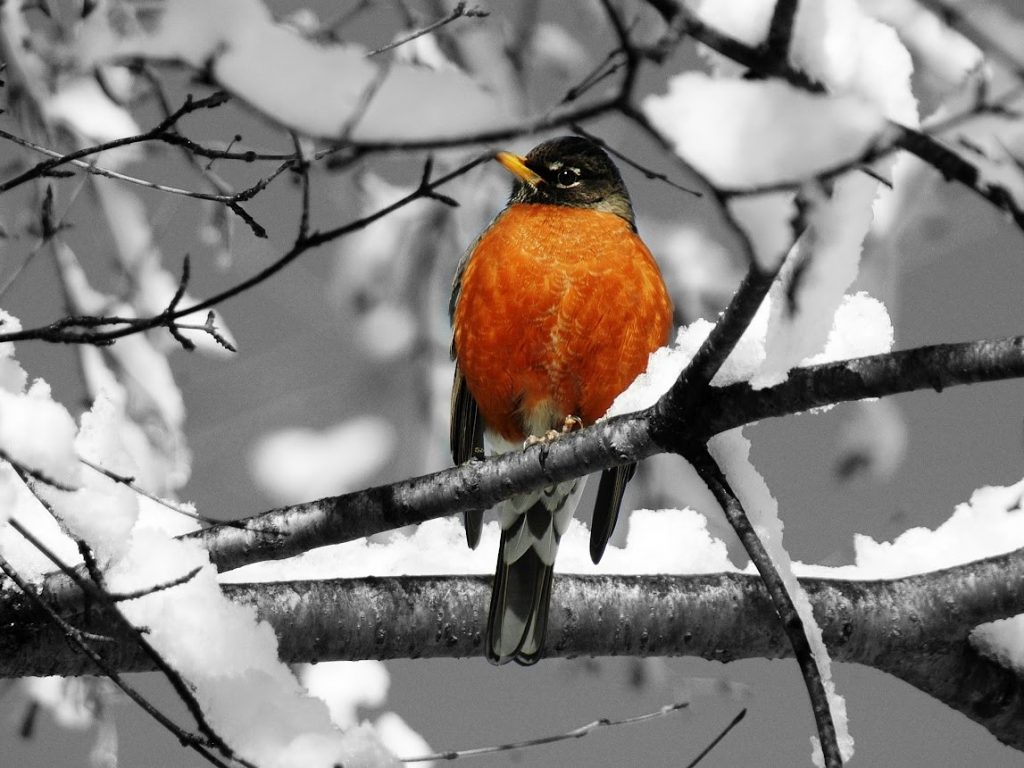
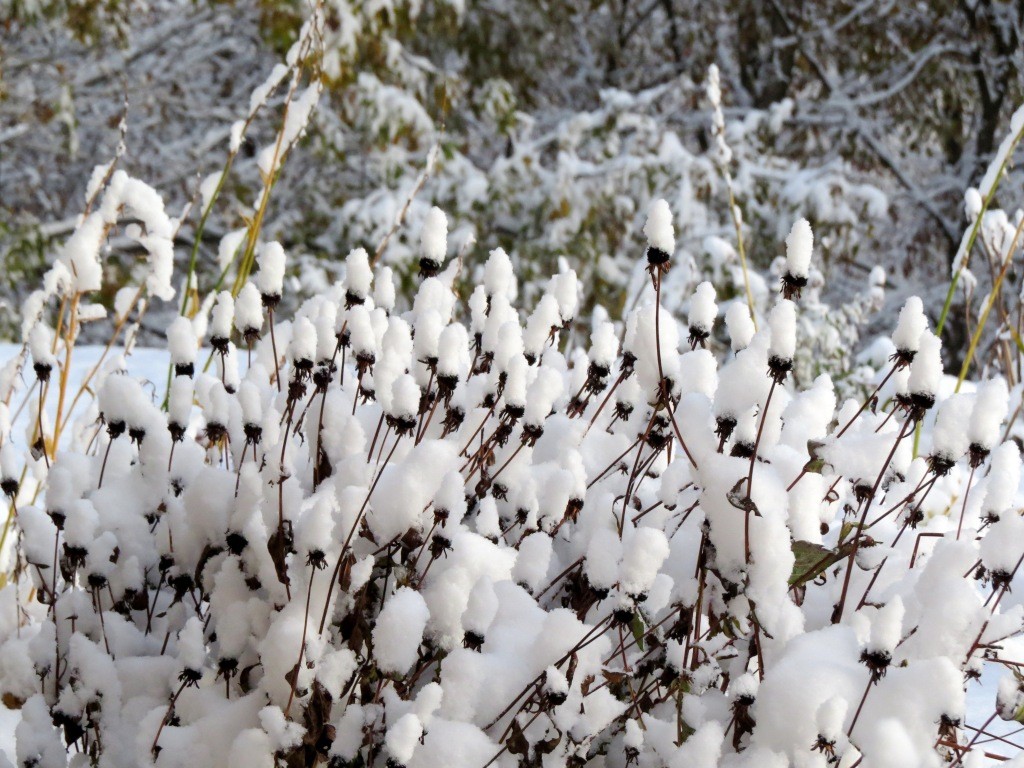
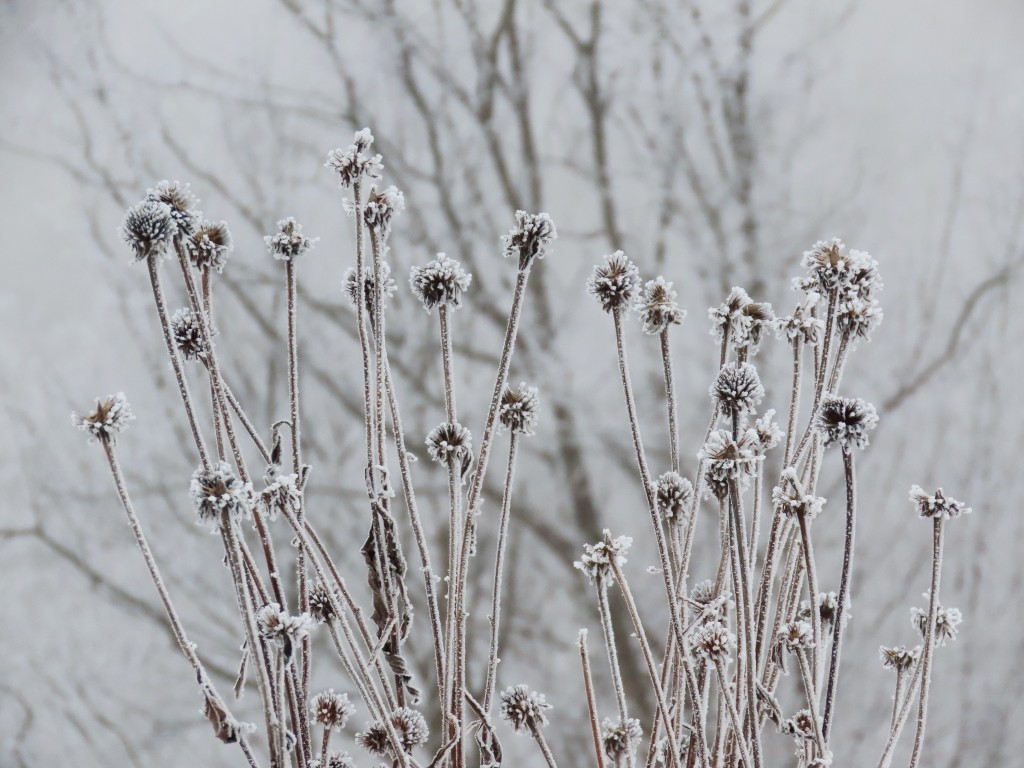
Since that fun sighting, we’ve deliberately left the yard cleanup until spring. Besides helping the birds, I think snow and frost look prettier on the dried flowers than on the ground. In more recent years, I’ve read numerous suggestions to leave the dried stems standing, explaining that birds benefit from the remaining seed heads. Some birds feed directly on the stalks, such as American Goldfinch and Black-capped Chickadee. Dark-eyed Junco and others forage for dropped seeds on the ground.
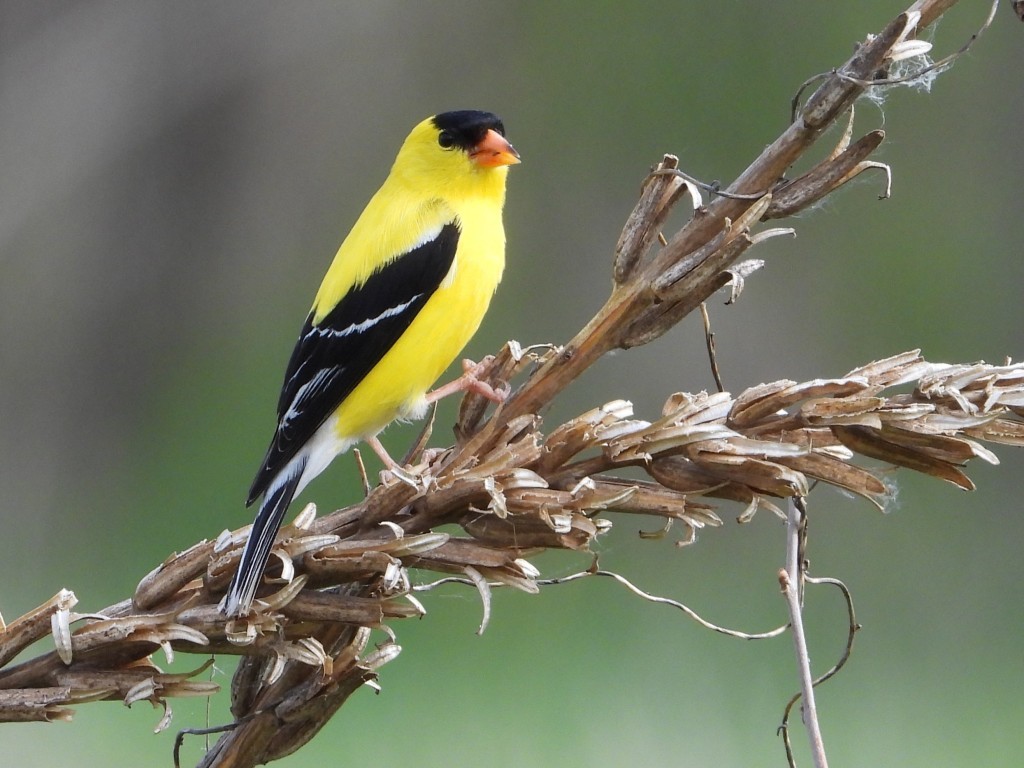
It may have been a year or two later (I really don’t remember) before the third surprise. When looking at a field guide, I stumbled on the fact that male American Goldfinch aren’t bright yellow year-round. What?! I immediately realized I likely wasn’t seeing only females on those stems that winter.
Nowadays I enjoy watching the males brighten up as the season changes. It makes me smile to realize how much I’ve learned about birds in the last few years, but I’m still just getting started.
Follow-up: Not Just for the Birds
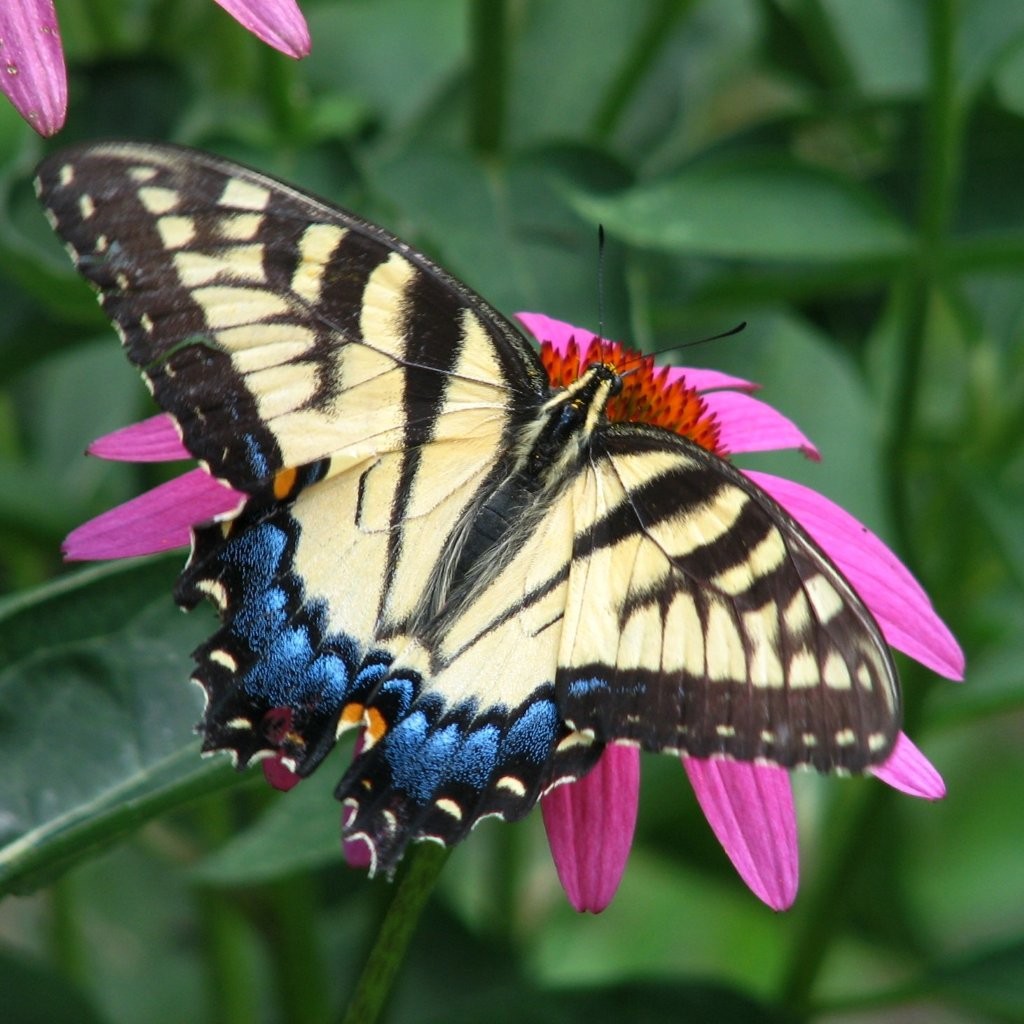
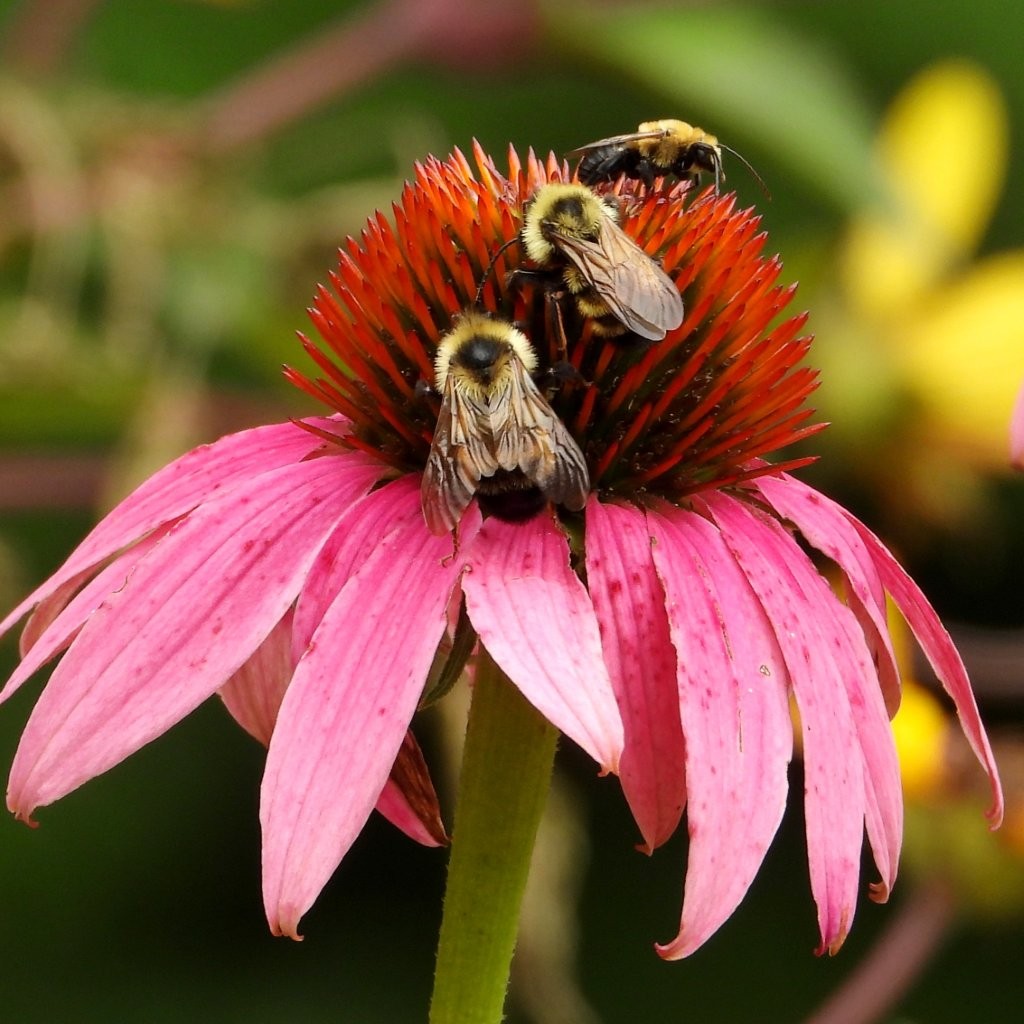
In reviewing the fall cleanup article, Marty Corfman pointed out that another important reason to skip the fall cleanup is for the bees and other bugs! That seemed like a good point, so I thought I’d do some quick research and share the ideal timing for garden cleanup. However, the topic is more complicated than I realized.
The idea is to wait until after the critters who are spending the winter inside hollow flower stems and under leaf litter have emerged. So when is that? To complicate matters, if you wait too long for the wintering critters to emerge, then new critters may have moved into whatever you didn’t trim and remove. Hmmm.
I found guidelines for finding the right window (when temperatures are above 50 degrees for a week or two, when you would plant tomatoes, when fruit tree blossoms are fading and dropping, when dandelions are blooming, when bees are buzzing, and when green shoots on perennials are starting to push out old material), but there were also a lot of guidelines on how to do the cleanup while causing minimal disturbance. So the question isn’t just when but also how.
After learning a bit more about the complications, I came across an article that said what I was beginning to conclude: “Contrary to popular belief, there’s never an ideal time to clean up your garden. Beneficial insects are vulnerable to garden clean-up activities at all times of the year due to their varied biological cycles. Common temperature-based guidelines can be misleading, so it’s crucial to really stop and question whether clean up is necessary at all before grabbing the rake or pruning shears.” Regarding the “never” answer, it follows up with, “Joking aside, there truly is never a good time to clean up your garden, despite what the internet memes say (but there are less bad ways to clean up which we will get into).” This article was on a website for a Canadian business specializing in what they called natural garden design, focusing on native plants: inournature.ca/when-to-clean-up-your-wildlife-garden, and I thought it provided an interesting summary of when, why, and how.
Here’s one more link from Better Homes & Gardens: bhg.com/when-to-clean-garden-in-spring-11918761
I’ll be factoring in this new information as I plan my spring yard cleanup. For now, consider skipping fall garden cleanup not just for the birds but also for the bugs!
Photos © Mary Leigh