By Kari Zelinskas
[from winter 2025 newsletter]
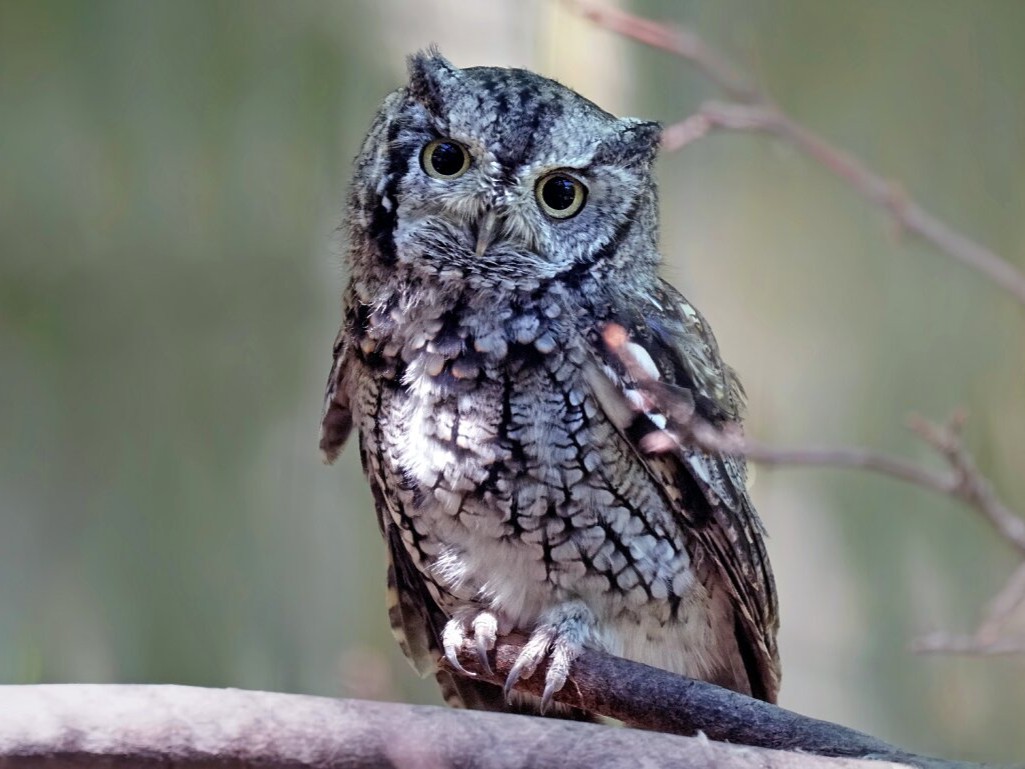
Meet the elusive Eastern Screech-Owl. Nocturnal, they roost during the day and hunt at dusk and night. Despite the name, Screech-Owls don’t just screech. Screeching is just one vocalization they make and use when defending their nest. The most prominent vocalization is a trill or whinny, but they can produce up to nine different sounds including low hoots, squeals, and barks. They also snap their bills when alarmed.
There are twenty-two species of Screech-Owls in the world, all in the Americas. There are three in the US: Eastern, Western, and Whiskered. The Eastern Screech-Owl lives in Iowa year-round. You can find them in a variety of habitats with trees, particularly near water. They need tree cavities for nesting and open spaces for hunting.
When searching for an Eastern Screech-Owl, look for a small (around 8”), stocky owl with a large head and no neck. Their plumage can be gray, brown, or reddish-brown, and their eyes are yellow. They have ear tufts like a Great Horned Owl and are sometimes called a little horned owl.
Screech-Owls swoop down to catch prey rather than hover. They eat a variety of small mammals including mice, shrews, squirrels, moles, and bats, as well as small birds such as finches, flycatchers, doves, and quail.Other prey include large insects, crayfish, earthworms, toads, lizards, snakes, spiders, and centipedes.
Screech-Owls are mostly solitary except during mating season in late winter through early spring. Females incubate and brood in tree cavities. Males feed the females and guard the nests. Young fledge in about 28 days and remain with parents until 8-10 weeks old. Both parents feed the young during this period. Screech-Owls have the potential to live 8-10 years in the wild; however, very few make it to that age.
What does it mean if you see or hear an owl? Owls are often seen as symbols of wisdom, or harbingers of change or transformation in your life. But more than likely it is a sign that you are in a healthy ecosystem.