By Kari Zelinskas
[from spring 2026 newsletter]
Derogatory expressions such as bird-brain, crazy as a loon, and dumb as a dodo imply birds lack intelligence or common sense. But modern research has debunked that idea, finding bird brains are quite complex and neuron dense, displaying similar neuronal organization and connectivity to mammals. In fact, birds have larger brains relative to their body size than all other vertebrates except mammals.
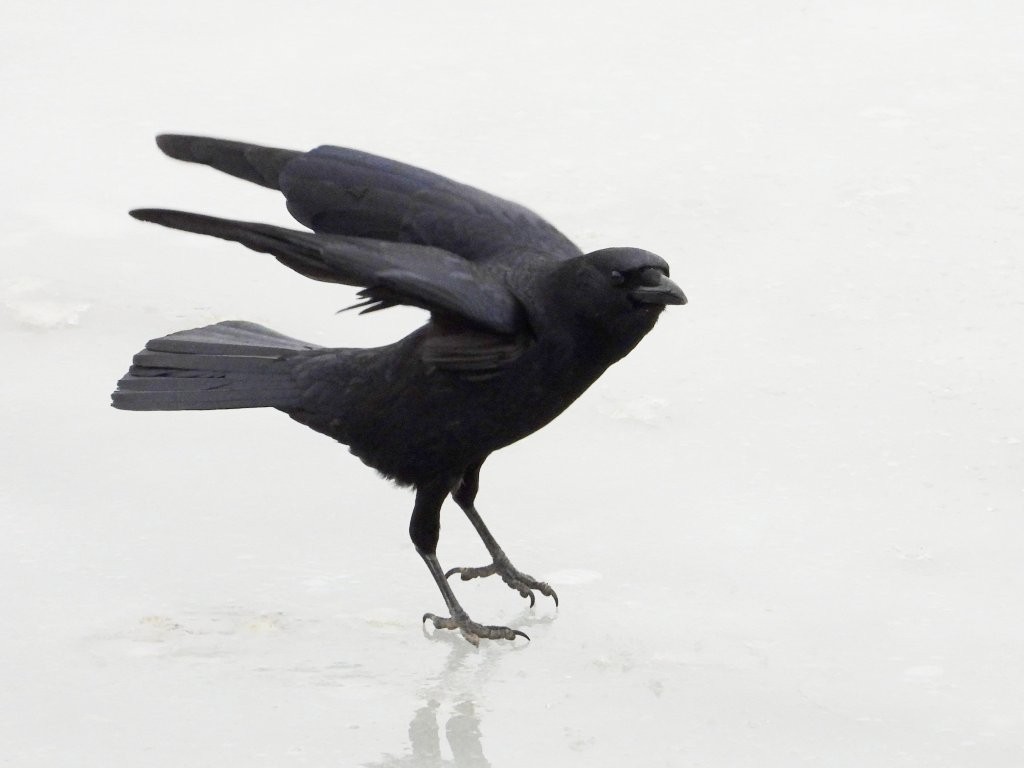
Learning how to learn is a measure of intelligence. Some birds, notably corvids such as Crows, Ravens, and Blue Jays, have demonstrated the ability to solve problems and use tools. For example, scientists have observed Crows in the wild using sticks with their beaks to extract insects from logs, and in labs, Crows have solved puzzles to get to food. They have also observed Carrion Crows and American Crows cracking hard-shelled nuts by dropping them on crosswalks, letting cars run over them.
Birds must learn the complex activity of song. Songs of the same species vary from region to region depending on what young birds learned from their parents. Young males in a new territory will often sing the “dialect” applicable to that territory.
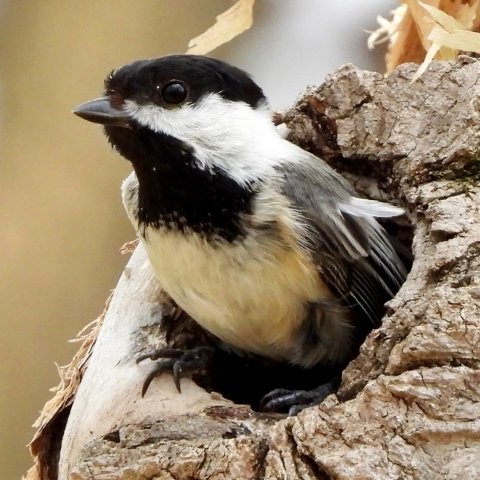
The hippocampus region controls bird memory. In birds that engage in caching (hiding seeds or nuts in locations and later retrieving them), the hippocampus is larger than birds who do not cache. The hippocampus in the Black-capped Chickadee, for example, grows during cache season, heightening its ability to remember its cache locations.
And how do birds compare to our beloved domesticated pets? Crows and Parrots often perform as well as dogs in tests that involve reasoning or learning. Blue Jays are able to master food-locating tasks that cats cannot. House Sparrows have learned to open automatic doors to grocery stores and cafes by hovering in front of the electric eye sensors. Can Fido or Fluffy do that? Maybe. But then, can Fido or Fluffy find their way to South America and back? Maybe not.
Mines of Spain SRA
5/10/22
© Mary Leigh
Cover: American Crow @ Dubuque River Walk (1/8/26) © Mary Leigh