
Pileated Drummings

September 2026 – Fall Issue

CONTENTS

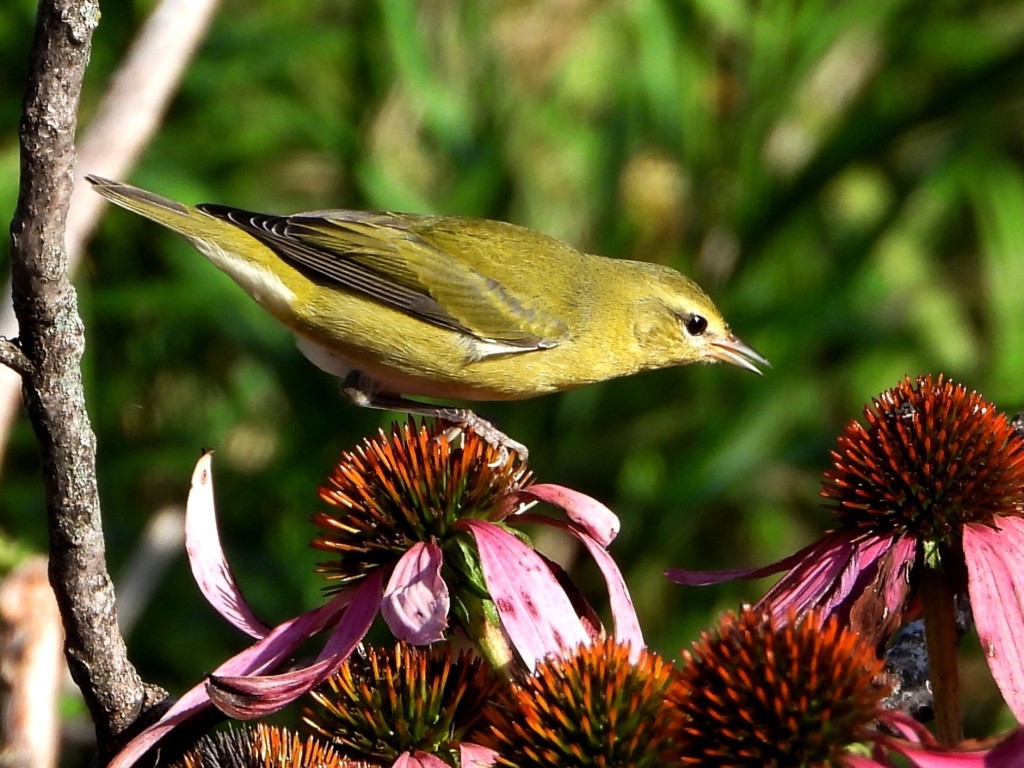
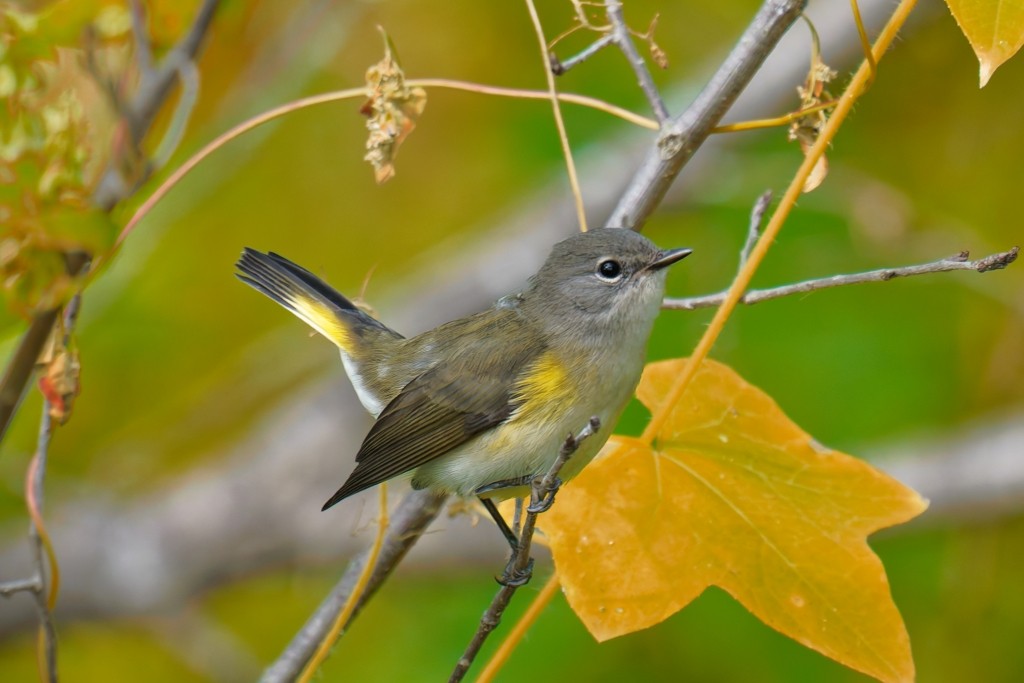
American Redstart (female)
Green Island WMA
9/5/25
© Paul Winer
President’s Corner

BY MARTY CORFMAN

This summer has been busy—and hot! For me, that has meant very little birding and hardly any photos taken since spring (though on the bright side, my photo editing backlog is at an all-time low!). Between my quiet camera and Dubuque Audubon’s usual summer hiatus, I’ve been feeling a bit disconnected, and I imagine many of you might feel the same.

The good news? Our 2026–2027 program schedule is coming together, and we have a fantastic lineup ahead! A huge thank you to Bob and Sandy Walton—without their expertise and connections, coordinating these events would be a daunting task.

I’m eager to kick off the new season and dive into fall migration. We’ve had a number of people sign up for our More Birding group, hoping for opportunities to learn from each other and find new places to go birding. For the past year, we have not been able to provide many outings, but a few of us are currently working to expand our guided birding outings, aiming to explore both fan favorites and hidden gems around the area. We are always open to new ideas, and we’d love extra help! If you’re interested in leading or co-leading an outing—or if you have location suggestions—please reach out to me at president@audubondubuque.org. We would also appreciate hearing from you if you’re familiar with a location and would be willing to be the route leader but not necessarily the leader for bird identification.

I look forward to seeing you in September!

Don’t miss our Fall Raptor Watch! Stop by on Sunday, September 20, any time between 9:30 AM and 2:00 PM. Check our website for location and details.

Recent Events

I had the pleasure of leading one very successful outing recently! See my article on the Chimney Swift Watch in this newsletter!

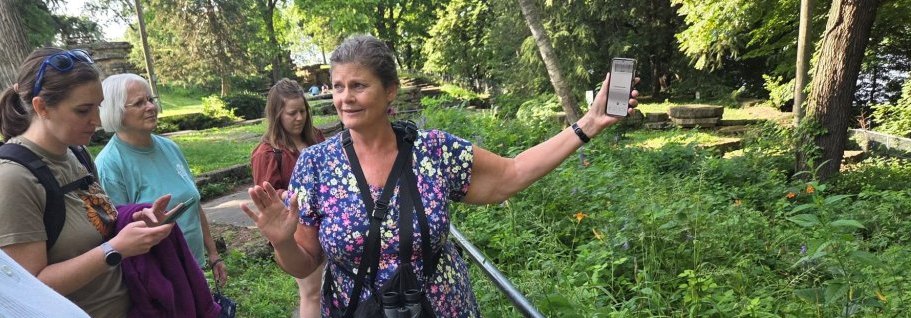
I also enjoyed participating in Dubuque Rendezvous on 6/25. This program involved local people in cultural, artistic and community events over a four day period. I was able to lead a program called Wings of the Wild: A Birding Adventure @ Eagle Point Park. I went around the event gathering people up like the pied piper, and about 20 people joined me for a walk through the park, a number of whom had no experience birding. They asked a lot of great questions that I did my best to answer. The first thing I told them about birding on a summer evening was that they would need to be happy with hearing, but not seeing birds, and that’s pretty much what happened! 🙂

These opportunities to interest new people in the love of birding and importance of conservation of our natural resources is one of the best parts of being involved with DAS!

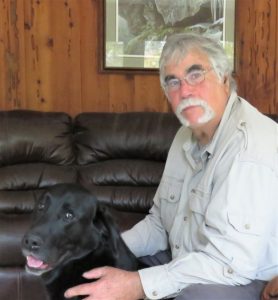
Marty @ Dubuque Rendezvous
© Jeanie Davis
The USGS North American Breeding Bird Survey

BY BOB WALTON

2026 marked the 60th anniversary of the USGS (U.S. Geological Survey) North American Breeding Bird Survey (BBS). Except for one year of missed data collection due to the COVID-19 pandemic, dedicated birders have collected data each summer since the survey began in 1966. The late George Crossley, a Dubuque Audubon member, began the survey route known officially as the Maquoketa BBS 36-017 Route in 1967.

The actual survey route was established by the United States Government Survey Office at the Patuxent Wildlife Research Center in Laurel, Maryland. This route is 25 miles long and begins just SE of Maquoketa and ends NE of LaMotte, Iowa. It winds along gravel backroads and paved roads, through wooded and agricultural land. The survey begins exactly ½ hour before sunrise with viewing and listening stops each ½ mile. The 50 stops are marked on a survey map and are repeated at the exact same locations every year. At each location, the survey recorder exits the vehicle and conducts a stationary point count of all birds seen or heard within a ¼ mile radius during a 3-minute count period. Any birds located before or after the 3 minutes or while travelling between stops cannot be counted. Absolutely no method of calling or coaxing birds can be utilized. The use of the popular Cornell Lab of Ornithology’s Merlin Bird ID app cannot be used to detect and identify birds during the BBS. The BBS has a strict rule that only the assigned observer is permitted to detect and identify birds along the route. An assistant may only help by doing the timing and recording of vehicles passing during the 3 minutes. All observers are required to have the independent ability to identify all birds in the area by sound and sight.

In an “index survey,” such as the BBS, the purpose is to compare results over years to measure changes in bird populations. To accomplish this goal, strict adherence to survey protocols is essential as they control factors that make birds numbers go up or down artificially, like weather conditions, count duration, and time of day.

I have truly enjoyed the past 23 years of doing this route since I took over for George Crossley in 2003. In that time, I have witnessed large population declines in the number of grassland birds, particularly Bobolinks, Meadowlarks, and all the grassland sparrows. Most of these declines have been due to residential encroachment and major changes in agricultural practices. On the positive side, I now see more Bald Eagles, Wild Turkey, Mourning Doves, and adaptable birds like Red-winged Blackbirds, House Wrens, Dickcissels, House Wrens, and Killdeer. New additions to my very first birding lists include Carolina Wrens, House Finches, Eurasian Tree sparrows, and Eurasian Collared Doves.

Due to my “aging hearing,” 2026 was my last BBS Survey. I have enjoyed birding in rural Jackson County and am happy that a Dubuque Audubon Society member, Tony Moline, will continue the tradition of Dubuque Audubon Society conducting this survey route. Anyone interested in taking over other routes may contact the U.S. Geological Survey’s Eastern Ecological Science Center in Laurel, Maryland, for routes available in our area.
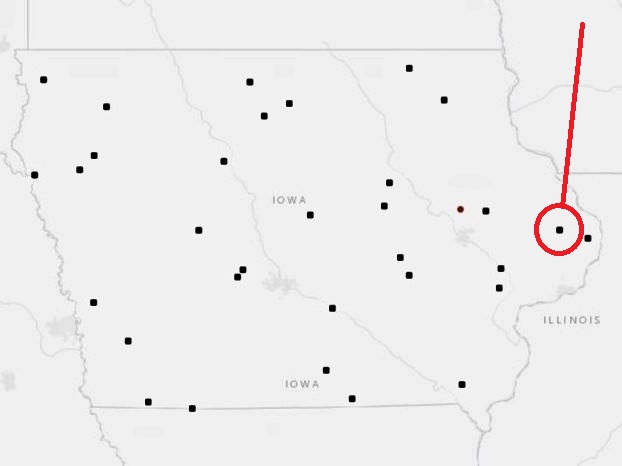
Map showing locations with routes in IowaIowa Route Map

Bob Walton


Annual Species Totals for Maquoketa Route

Gardening for Birds

BY KARI ZELINSKAS

The long winter months are quickly approaching. Take advantage of this time to plan for how you can make your yard more attractive to a variety of birds. Choosing native plants will best support your local birds by providing food, shelter, and nesting sites appropriate to your area.

Choose hardy, native plants with suitable sun, moisture, spacing, and soil type needs.

Look for flowers, trees, and shrubs that provide food sources such as seeds, nuts, fruit, or nectar. And don’t forget plants (brush/leaf debris piles too) that attract insects. A pair of chickadees needs to catch 6,000-9,000 caterpillars to raise one single clutch of chicks!

Good plant choices include:

Trees and Shrubs

Mulberries – summer berries are a favorite food of more than 40 bird species.
Dogwoods  insects love the flowers in spring; birds love the fall fruits.
Crabapples – birds eat the flower buds, flowers, fruit and seeds; provide cover and nest sites.
Serviceberries  flowers attract insects; fruit attracts most fruit-loving birds (humans too!).
Viburnums  flowers attract insects; birds eat berries and find cover in branches.
Red Cedar – offers cover, nest sites, and winter fruit for birds.
Oaks – keystone species: support more caterpillars, insects and birds than any other native tree.
Pines – provide cover, winter protection, food, and nesting sites.
Wild Plum – flowers in spring, attract insect-eating species.

Flowers (annual and perennial)

Attracts seed eaters: Sunflowers, Sweet William, Poppies, Asters, Black-eyed Susans, Purple Coneflower, Cosmos, Milkweeds, Marigolds
Attracts hummingbirds: Salvia, Verbenas, Zinnias, Beard-tongue, Bee Balm, Foxgloves, Liatris, Daylilies, Cardinal Flower, Climbing Honeysuckle, Marigolds

For a more extensive list of plant and gardening ideas for birds, go to:


Add final touches with bird baths and bird houses (see ideas at above websites).

With a little planning, time, and effort, you
can turn your yard into a bird oasis to benefit you, your feathered friends,
and the environment.

Skip the Fall Cleanup!

BY MARY LEIGH

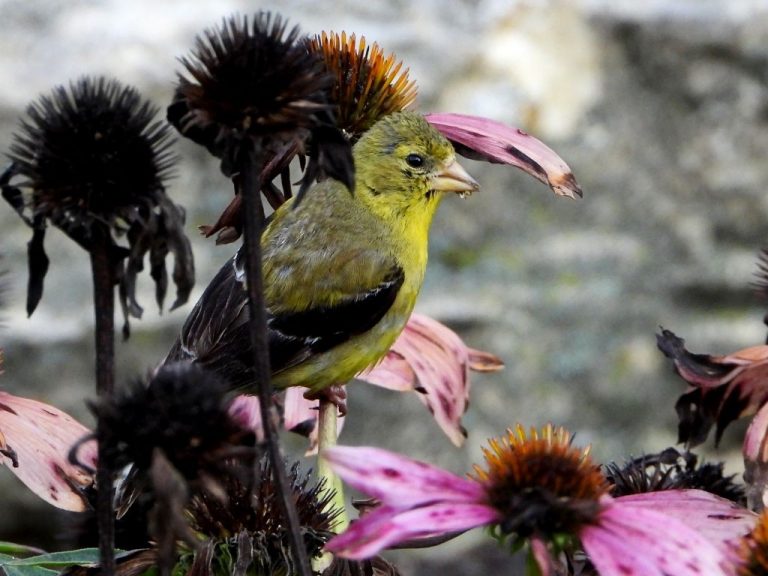
Kari’s article above on gardening reminded me of the related topic of garden cleanup. Something like 25 years ago, my husband and I didn’t get around to trimming back our flowers in the fall, which was generally considered the thing to do at the time. This occurrence led to 3 surprises. First, that winter, I noticed a bunch of little birds feasting on the Black-eyed Susans we hadn’t cut back! Second, I took a closer look and was surprised to see they were American Goldfinch. I had only noticed them in the summer and assumed they migrated. I remember finding it odd that they were all females, but I’ll follow up on that observation later. 

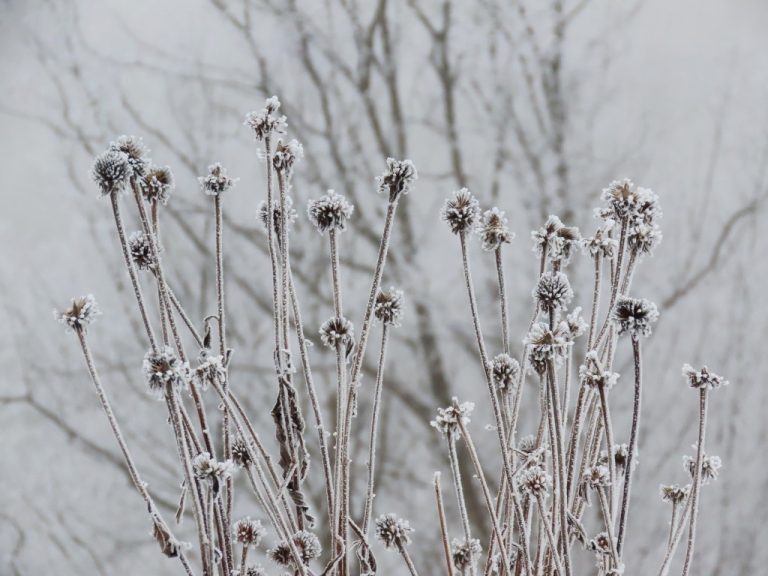
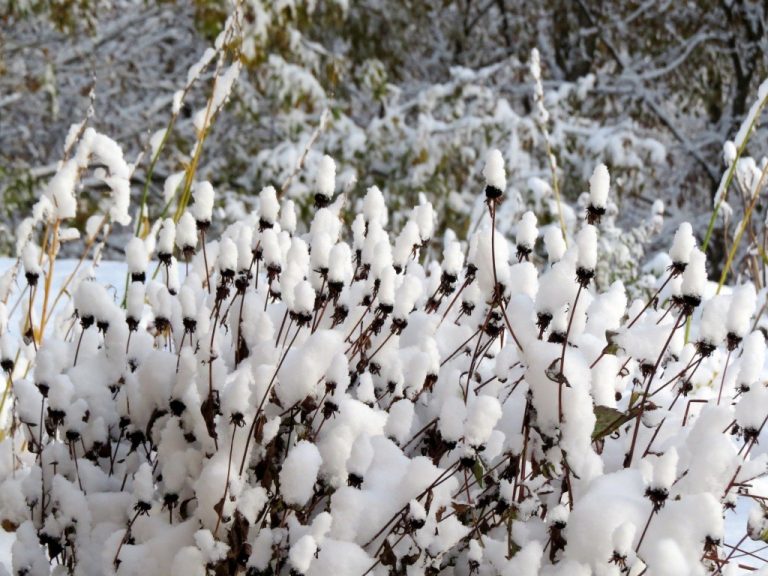
Since that fun sighting, we’ve deliberately left the yard cleanup until spring. Besides helping the birds, I think snow and frost look prettier on the dried flowers than on the ground. In more recent years, I’ve read numerous suggestions to leave the dried stems standing, explaining that birds benefit from the remaining seed heads. Some birds feed directly on the stalks, such as American Goldfinch and Black-capped Chickadee. Dark-eyed Junco and others forage for dropped seeds on the ground. 

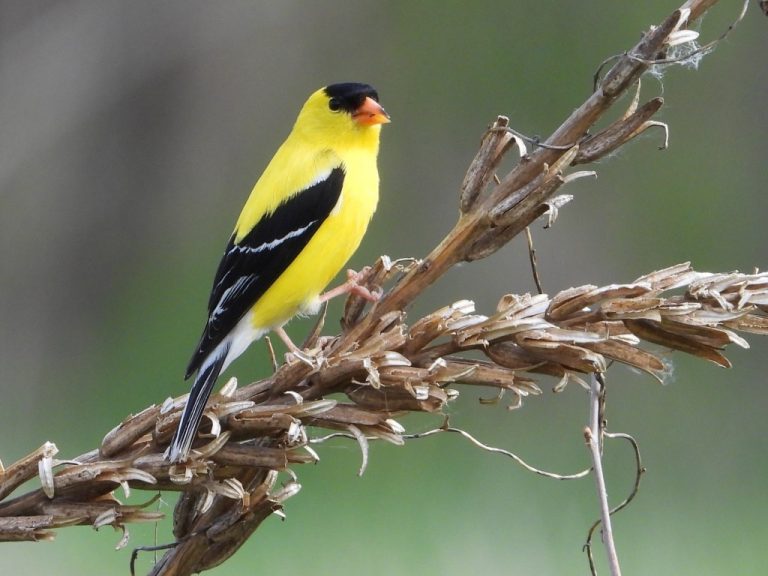
It may have been a year or two later (I really don’t remember) before the third surprise. When looking at a field guide, I stumbled on the fact that male American Goldfinch aren’t bright yellow year-round. What?! I immediately realized I likely wasn’t seeing only females on those stems that winter. 

Nowadays I enjoy watching the males brighten up as the season changes. It makes me smile to realize how much I’ve learned about birds in the last few years, but I’m still just getting started.

© Mary Leigh

Follow-up: Not Just for the Birds

BY MARY LEIGH

In reviewing the fall cleanup article, Marty Corfman pointed out that another important reason to skip the fall cleanup is for the bees and other bugs! That seemed like a good point, so I thought I’d do some quick research and share the ideal timing for garden cleanup. However, the topic is more complicated than I realized.

The idea is to wait until after the critters who are spending the winter inside hollow flower stems and under leaf litter have emerged. So when is that? To complicate matters, if you wait too long for the wintering critters to emerge, then new critters may have moved into whatever you didn’t trim and remove. Hmmm.

I found guidelines for finding the right window (when temperatures are above 50 degrees for a week or two, when you would plant tomatoes, when fruit tree blossoms are fading and dropping, when dandelions are blooming, when bees are buzzing, and when green shoots on perennials are starting to push out old material), but there were also a lot of guidelines on how to do the cleanup while causing minimal disturbance. So the question isn’t just when but also how.

After learning a bit more about the complications, I came across an article that said what I was beginning to conclude: “Contrary to popular belief, there’s never an ideal time to clean up your garden. Beneficial insects are vulnerable to garden clean-up activities at all times of the year due to their varied biological cycles. Common temperature-based guidelines can be misleading, so it’s crucial to really stop and question whether clean up is necessary at all before grabbing the rake or pruning shears.” Regarding the “never” answer, it follows up with, “Joking aside, there truly is never a good time to clean up your garden, despite what the internet memes say (but there are less bad ways to clean up which we will get into).” This article was on a website for a Canadian business specializing in what they called natural garden design, focusing on native plants: inournature.ca/when-to-clean-up-your-wildlife-garden, and I thought it provided an interesting summary of when, why, and how.

Here’s one more link from Better Homes & Gardens: bhg.com/when-to-clean-garden-in-spring-11918761

I’ll be factoring in this new information as I plan my spring yard cleanup. For now, consider skipping fall garden cleanup not just for the birds but also for the bugs!

© Mary Leigh

Chimney Swift Watch

BY MARTY CORFMAN

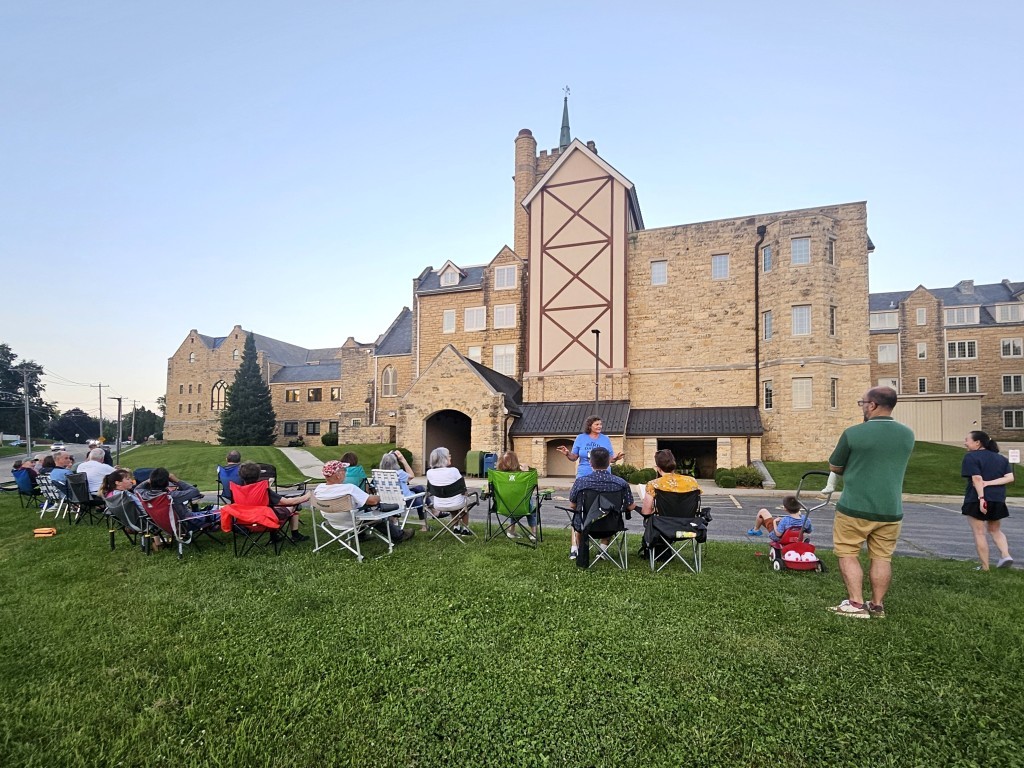
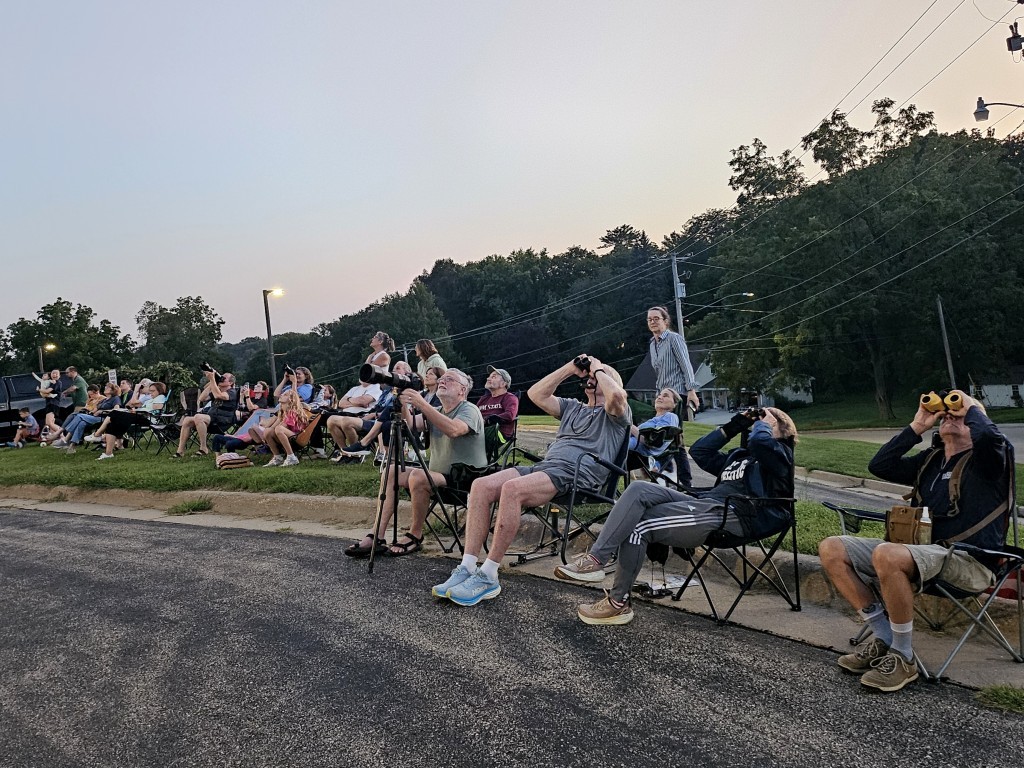
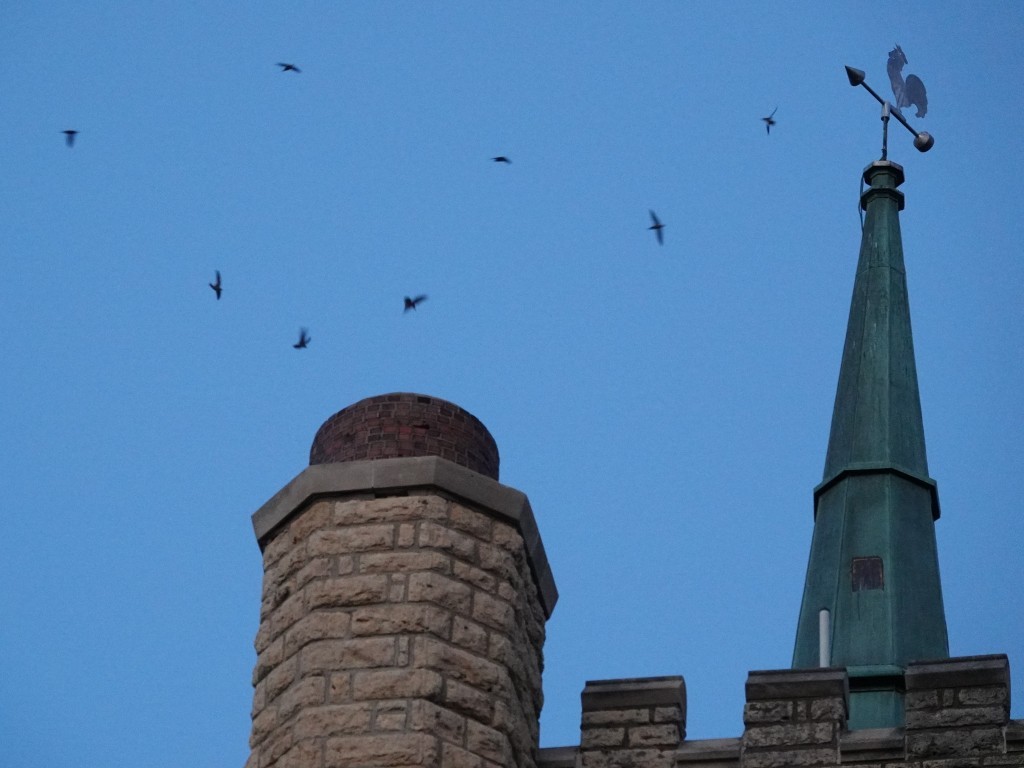
On Monday, August 24th, I had the pleasure of leading a Chimney Swift Watch at Wartburg Theological Seminary. I decided to publicize the event to the full community through all our available media outlets, and I was so pleased to meet so many new faces as a result! This is the second time we’ve held this outing, and it’s been such a success that I plan to make it an annual event. About 36 people of all ages attended this year—many of whom had no experience with birding, let alone knowledge about Chimney Swifts!

I did my best to answer questions about the fascinating roosting behavior of these wonderful birds. It is incredible to see them congregate in the sky, flying randomly all over the area while catching bugs for a bedtime snack. Eventually, they form a dynamic vortex, swirling in a funnel formation like a single organism. Then, one bird at a time—and soon dozens at once—they stall over the chimney, fold their wings, and drop tail-first into the opening to roost for the night.

Once inside, they cling vertically to the inner walls, filling the chimney from the bottom up as more birds arrive. They roost tightly together in dense clusters for warmth. We had a moderate number of birds this year; hopefully, the larger migrating flocks will arrive over the next couple of weeks as they head south.

Chimney Swifts rely on unlined chimneys and hollow trees for roosting and nesting sites. As old chimneys are decommissioned, capped, or torn down, and dead trees are removed, these vulnerable birds face severe population declines across North America. In fact, they are officially classified as Threatened in Canada. Widespread pesticide use has further compounded the problem by drastically reducing the flying insect populations they depend on for food.

These incredible aerialists spend virtually their entire lives in flight, landing only to incubate eggs or roost at night. Because they rely on daylight to navigate, they will not fly in the dark and can even be tricked by solar eclipses or severe storm clouds that darken the sky, prompting them to return to roost until the false “dusk” passes. However, they do not fly in all weather conditions—heavy downpours, fog, or prolonged cold spells ground them, as rain suppresses flying insects and impairs their flight.

One of my favorite facts about these birds is how they construct their nests. During the breeding season, specialized salivary glands produce a sticky, glue-like substance that they use to cement small twigs together and attach the nest to a vertical wall. They gather these twigs entirely on the wing, snatching dead twigs off branches with their feet as they fly past! While they roost communally in large numbers during migration, breeding pairs seek out individual sites during the nesting season, returning to communal roosts only after their young have fledged.

I hope you get to witness a Chimney Swift roost for yourself this season! Otherwise, please join me for next year’s watch!

2026 Bluebird Monitoring

BY KEN KISS

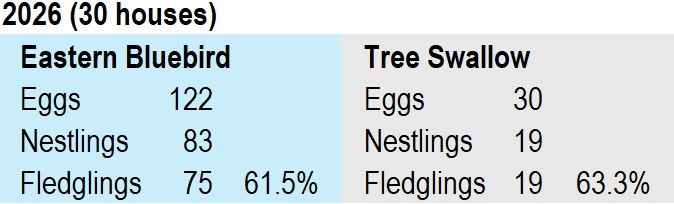
This year we started monitoring Eastern Bluebirds at the Mines of Spain on April 19th and ended with one final check in late August. We try to monitor weekly during the breeding season but slow down our inspections in August when the nesting activity slows. We have a total of 30 bluebird houses, and typically we split the monitoring area into two halves, with one person doing the southern route and the other doing the northern route. This year Tom Davis and Lynn Schroeder helped me with the monitoring. The results are as follows: 

Our total fledgling count of 75 was up 12 from last year. However, the fledgling/egg ratio was lower at 61.5% this year compared to 73.3% last year. We had several bluebirds lay eggs that never hatched and had some eggs disappear due to predators.

New Private Bluebird Route!

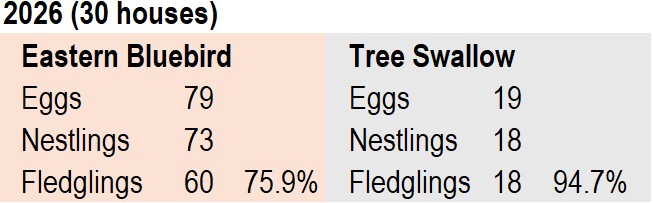
I’m pleased to share that Galen Mathis, who volunteered to monitor the houses with me last year, created his own Bluebird route this year. He put up 30 houses on CRP and prairie fields on his and his neighbor’s property along Chesterman Road and monitored them as we do at the Mines of Spain. His results are as follows:

His heaviest losses were in the month of May due to the gnats and black flies, but he counted 60 fledglings with a fledgling/egg ratio of 75.9%.

Bird Survey at Saint Francis Property

BY TONY MOLINE

On June 6th, Dubuque Audubon members conducted a breeding bird survey on the Sisters of Saint Francis property in Dubuque. The property hosts a prairie of 90+ acres with around 80 acres enrolled in the Conservation Reserve Program. 12 acres of woodland and 56 acres of prairie have been placed in a conservation easement with the Iowa Natural Heritage Foundation.

36 bird species were detected during the survey, including the state-threatened Henslow’s Sparrow. A male Bobolink was also heard, but there was no significant population of the species.

See our eBird checklist for a complete list of the 36 birds reported.

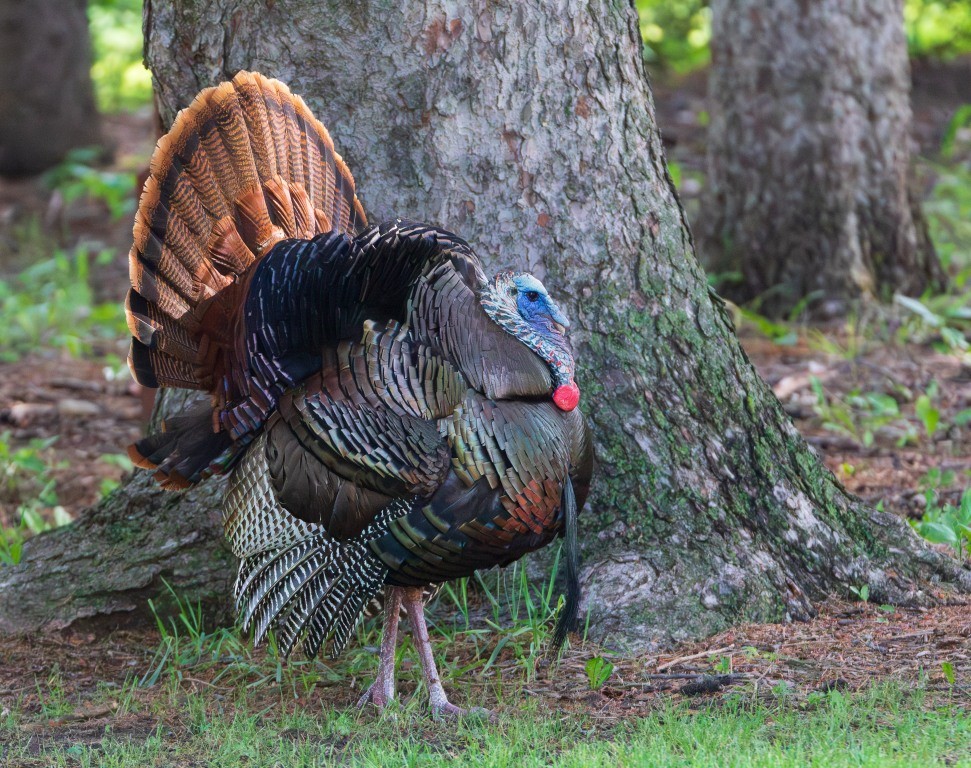
Wild Turkey
6/6/26 © Ken Kiss
Expanded Coverage Area

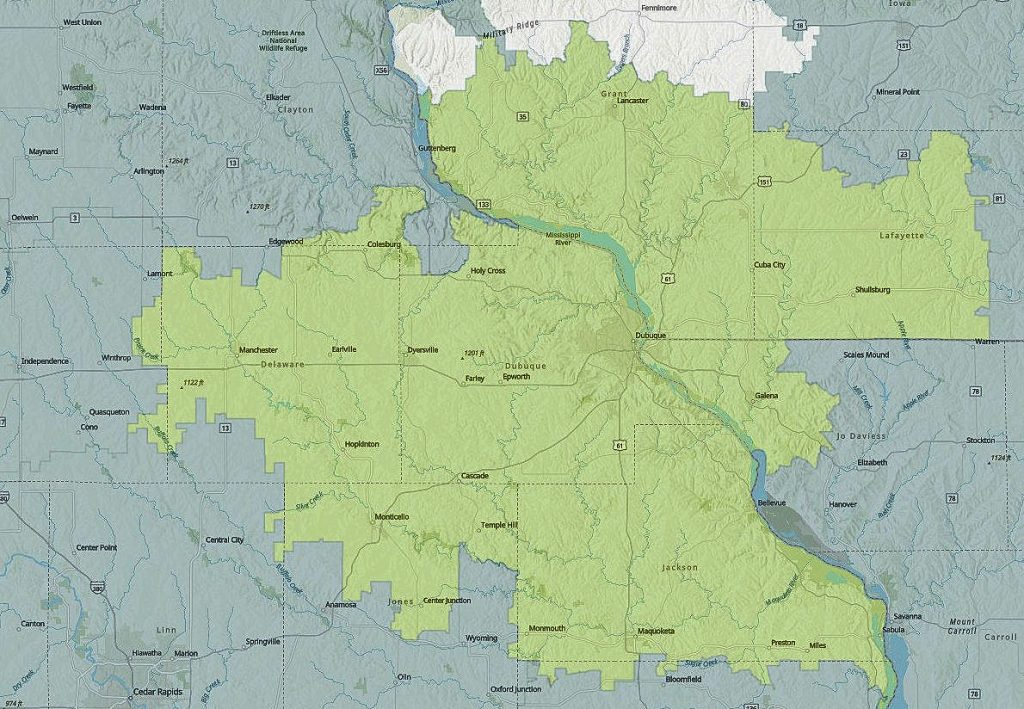
In August, we expanded our chapter’s coverage area to add an additional 9 zip codes. National members with a zip code in our tri-state coverage area are automatically assigned to our local chapter. (See our Join page to learn about national memberships.)

Anyone may subscribe to our email list and/or join as a local member.

Dubuque Audubon Chapter Boundaries

CALENDAR OF EVENTS

Upcoming Events:

  • THU 9/10/26: September Program: Iowa Audubon – the Voice for Iowa’s Birds with Doug Harr
  • SUN 9/20/26: Fall Raptor Watch @ Mines of Spain
  • THU 10/8/26: October Program: Audubon Conservation – Grazing for Grassland Birds with Tucker Lutter
  • THU 11/12/26: November Program: Birds and Wildlife of Nebraska with Ty Smedes
 
See our EVENTS page for full details on all upcoming events.
 
Our events are usually free and open to the public. However, to support our local chapter directly or through a National Audubon Society membership, please see our JOIN page.

CHAPTER LEADERSHIP

OFFICERS

President: Marty Corfman

Vice President: Ken Kiss

Treasurer: Andrea Pellerito

Secretary: Kari Zelinskas

BOARD MEMBERS

  • Mary Leigh
  • Tony Moline
  • Maggie O’Connell
  • Lori Ollendick
  • Bob Walton (Iowa Audubon Liaison)
  • Sandy Walton
  • Paul Winer

COMMITTEE CHAIRS

Membership: Mary Leigh

Program: Bob & Sandy Walton

Education: [open position]

Conservation: [open position]

Field Trips & Volunteer Opportunities: Tony Moline

Technology: Lori Ollendick

Communications: Marty Corfman

  • Website: Mary Leigh
  • Newsletter: Marty Corfman, Mary Leigh
  • Publicity: Marty Corfman