Pileated Drummings

June 2026 – Summer Issue

CONTENTS

President’s Corner

BY MARTY CORFMAN

Dear Members and Friends,

If you have stepped outside early in the morning this May, you’ve likely heard it: the vibrant, chaotic symphony that tells us May-gration is officially at its peak. Here in Dubuque, our trees and skies are alive with the stunning colors of returning Baltimore Orioles and Yellow Warblers. For birders and nature lovers alike, this is our favorite kind of frenzy—a reminder of the incredible, fragile connections that bind our local habitats to ecosystems thousands of miles away.

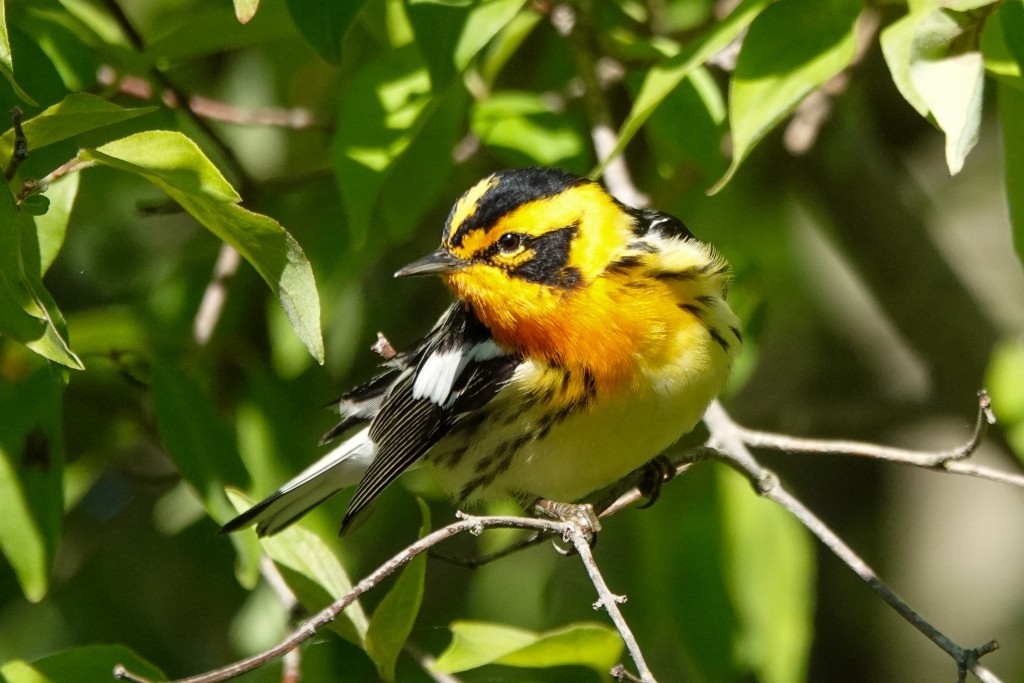
I had the fantastic opportunity to spend several days at Magee Marsh in Ohio during the “Biggest Week in American Birding” annual festival. Due to family obligations, I did not participate in any of the formal group or educational opportunities available, but the migrating birds did not disappoint! Seeing the tiny warblers are eye level was such a wonderful change from the reality of “warbler neck” we get looking into our tall tree canopies for these birds. 

While May brings immense joy, it also brings responsibility. These nesting and migrating birds face significant hazards. I urge each of you to take two simple actions this month to protect our feathered visitors:

  1. Keep it Dark: Keep your outdoor lights turned off overnight during spring and fall to help nocturnally migrating birds navigate safely around our town.
  2. Plant Native: If you are updating your garden or patio this spring, choose native plants. They host the essential insect populations that nesting mothers need to feed their chicks.

I’d like to take a moment to celebrate the accomplishments we’ve enjoyed over this last year. We just finished up our monthly September-May program season, and by all accounts, this year was a real success. Thank you to Bob and Sandy Walton, who have worked hard to identify and recruit programs of such variety and importance to our members and friends in the community. Attendance at these events continues to grow, and I hear often how much people enjoy these unique opportunities for learning. We also just held our annual meeting, at which your board was elected. Thank you to each of our board members for all you do to help DAS fulfill our mission. In particular, I’d like to welcome Paul Winer to the board. His knowledge and experience will be a welcome asset to our group, and you can learn a bit about him in his “bio box” in this newsletter!

Thank you for your continued support, your passion, and your dedication to protecting the natural world we all share. I hope to see you out on the trails!

Marty Corfman

Blackburnian Warbler
© Marty Corfman
Magee Marsh boardwalk (Ohio)
5/14/26
2026 Duck Waddle

BY BOB WALTON

March 7th found Sandy and me at the Green Island Channel 4 parking lot around 5:20 a.m. to participate in the Dubuque Audubon’s 47th annual spring waterfowl watch. I have always enjoyed the pre-dawn sounds of the marsh and try to be there as much as an hour before the main group arrives at sunrise. This time is probably best described by Aldo Leopold in his Sand County Almanac when he said, “To arrive early in the marsh is an adventure in pure listening…and when a flock of bluebills, pitching pondward, tears the dark side of heaven in one long circling nosedive, you catch your breath at the sound, but there is nothing to see except stars.”

It was totally dark when we pulled into the Channel 4 parking lot and lowered our windows, to be immediately greeted by the raucous call of a resident Canada Goose warning that we were near his nesting territory. His honking was soon followed by more honking and the unmistakable quack of migratory female Mallards as a flock of hundreds took to the air. As the eastern horizon began to glow, the area over the Mississippi had large smoke-like clouds of ducks and White-fronted Geese. As if on cue, a small flock of bluebills (Lesser Scaup) pitched downward with a roar from their wings and landed somewhere in the wetlands to the south of the lot, near the railroad tracks. They were greeted by the trumpet call of Trumpeter Swans, the nasal trill of Sandhill Cranes, and the “pip, pip, pip” of Northern Pintails.

At sunrise a contingent of 26 Duck Waddle participants joined us. With spotting scopes and binoculars, we found Ringneck Duck, Bufflehead, Northern Pintail, American Widgeon, Gadwall, Northern Shoveler, Blue-winged Teal, and Green-winged Teal, along with the Mallards, White-fronted Geese, and Lesser Scaup. Of course, there were the resident Canada Geese, and in their midst was one Mallard-sized Cackling Goose.

Next the group went out Fish Lake Road where we saw large flocks of White-fronted Geese and Mallards, and 6 Sandhill Cranes in a picked corn field. About ½ mile out the road, a flock of over 100 Trumpeter Swans were in a field to the west, flanked by more White-fronted Geese, several Snow Geese, over 200 Northern Pintails, and a Ross’s Goose. Unfortunately, when we reached the parking lot at the end of Fish Lake Road, the wind kicked up and it began to rain, but we did see 4 Northern Harriers and several Bald Eagles.

From Fish Lake Road we drove to the Blakes Lake parking lot on the east side of Green Island. Trees shielded us from the wind, and we ventured about 100 yards out the dike where there were large flocks of waterfowl in the open water. A raft of diving ducks had Lesser Scaup, Ring-necked Duck, Bufflehead, Common Goldeneye, Canvasback, Hooded Merganser, and Common Merganser. In the distance were more Trumpeter Swans, American White Pelicans, and Double-crested Cormorants.

At around 9 a.m., it was time to head to Sabula for breakfast and to check out Sabula’s three lakes. The biggest surprise of the day was when I decided to stop at the North Lake boat ramp. The water was ¾ frozen and was covered by hundreds of gulls and Bald Eagles. We counted 183 eagles sitting in trees, and those on the ice were comical to watch as they attempted to pull frozen shad out of the ice. Another 17 eagles were on the north edge, making the count over 200 eagles—many within 100 yards of our cars! The gulls were Ring-billed Gulls, Herring Gulls, and at least one Iceland Gull.

Following a well-deserved breakfast and hot coffee, we checked out South Sabula Lake, but it had white caps and few waterfowl. On the way back to the main road there were around 100 Common Mergansers, 30 Red-breasted Mergansers, and a dozen Ruddy Ducks on Middle Sabula Lake.
Overall, it was a great “Duck Day!”
Bluebird Monitoring at MOS

BY KEN KISS

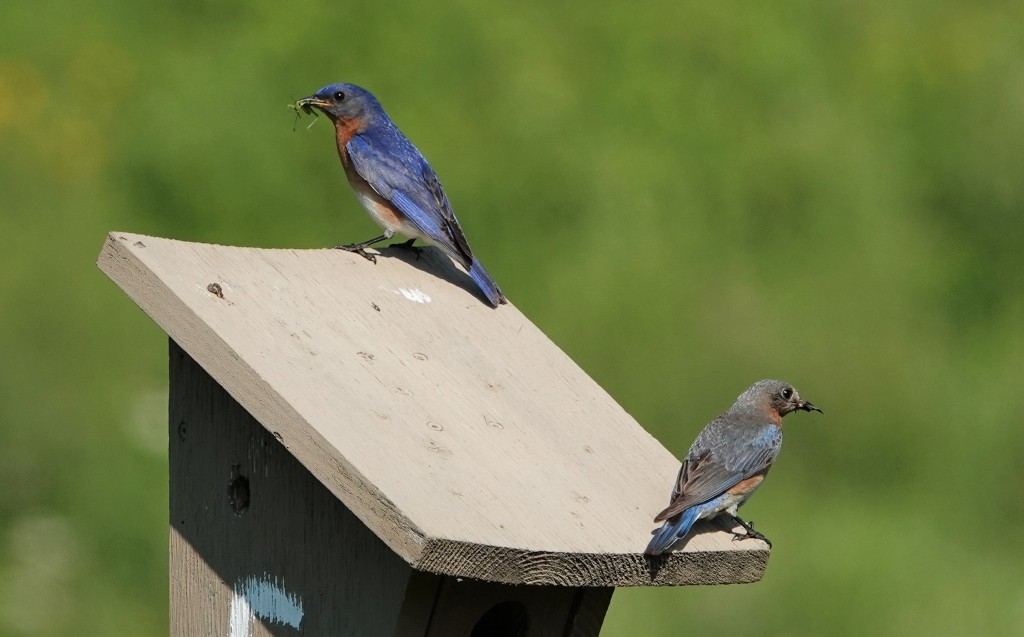
Tom Davis and I continue to monitor the bluebird houses at Mines of Spain, and this year we are happy to welcome Lynn Schroeder back to our group! We monitor the 30 houses weekly and maintain our records. Typically we get Eastern Bluebirds, Tree Swallows and Northern House Wrens. Results have been fairly consistent year to year, and we’ll update you with the 2026 results in the fall.

Eastern Bluebird
© Marty Corfman
Mines of Spain SRA
7/8/23
Summer Opportunity

Tag Along for Bluebird Monitoring at Mines of Spain

June – August 2026
Friday afternoons/Saturday mornings (by appointment)

Love birds? Love being outside? Want to tag along on the bluebird trail? Join Ken Kiss or Lynn Schroeder of the Dubuque Audubon Society at the Mines of Spain and help monitor nests, count eggs, and count baby bluebirds. All ages are welcome. 

Fill out our contact form if interested. Please include your phone number in the comments, so that one of them can call you to make arrangements.

Tree Planting at Mines of Spain

BY MARY LEIGH

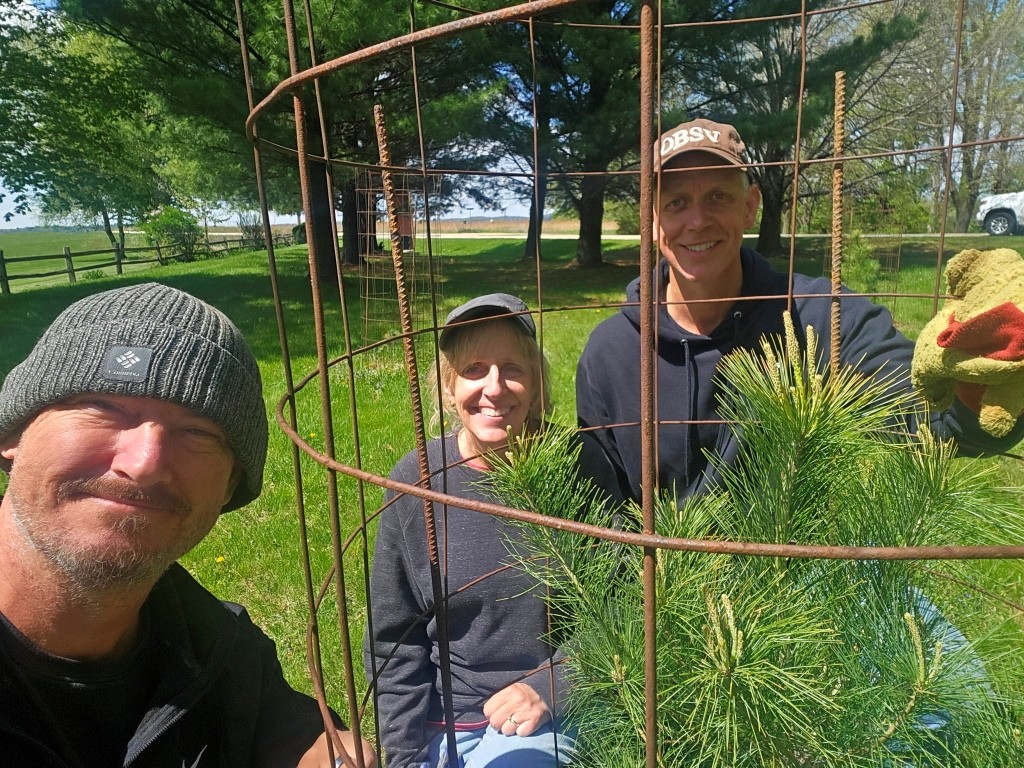
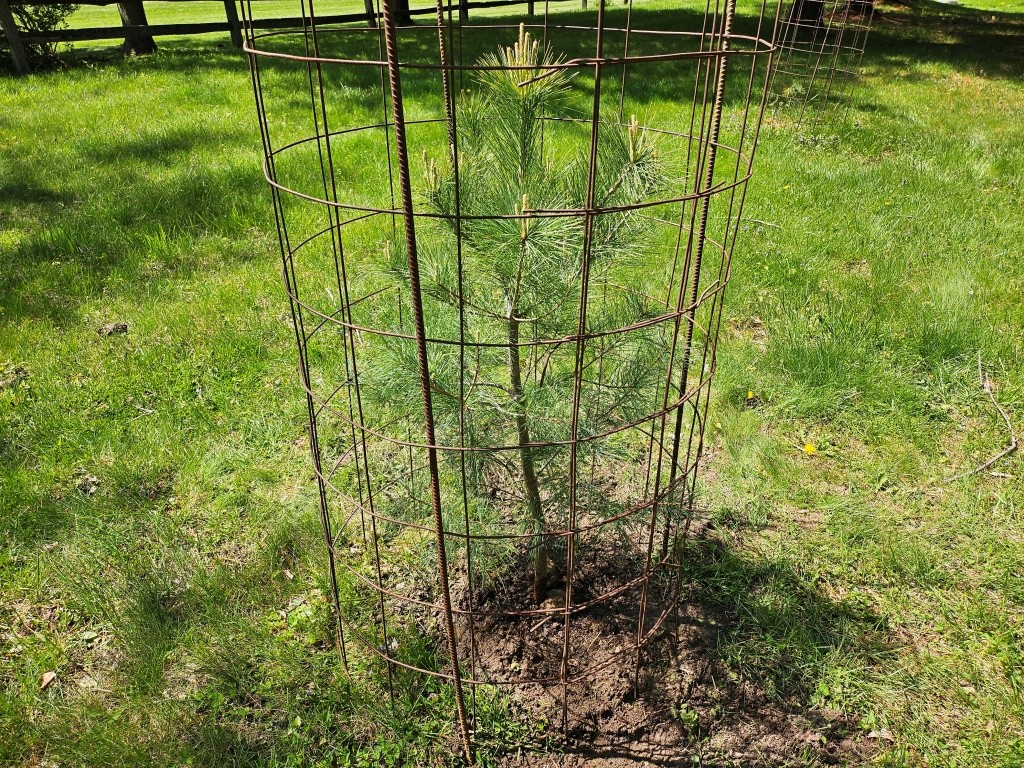
Dubuque Audubon purchased four 3-4′ eastern white pine and two 2-3′ white spruce for approved planting at Mines of Spain SRA. Three volunteers planted, caged, and watered the six trees on May 1st. 

The trees were divided between the Mines of Spain south entrance and Riprow Valley (two pines and one spruce at each location)We hope these new trees will prove to be a good initial size, growing faster than bare root seedlings, while avoiding the adjustment delay often seen with larger trees.

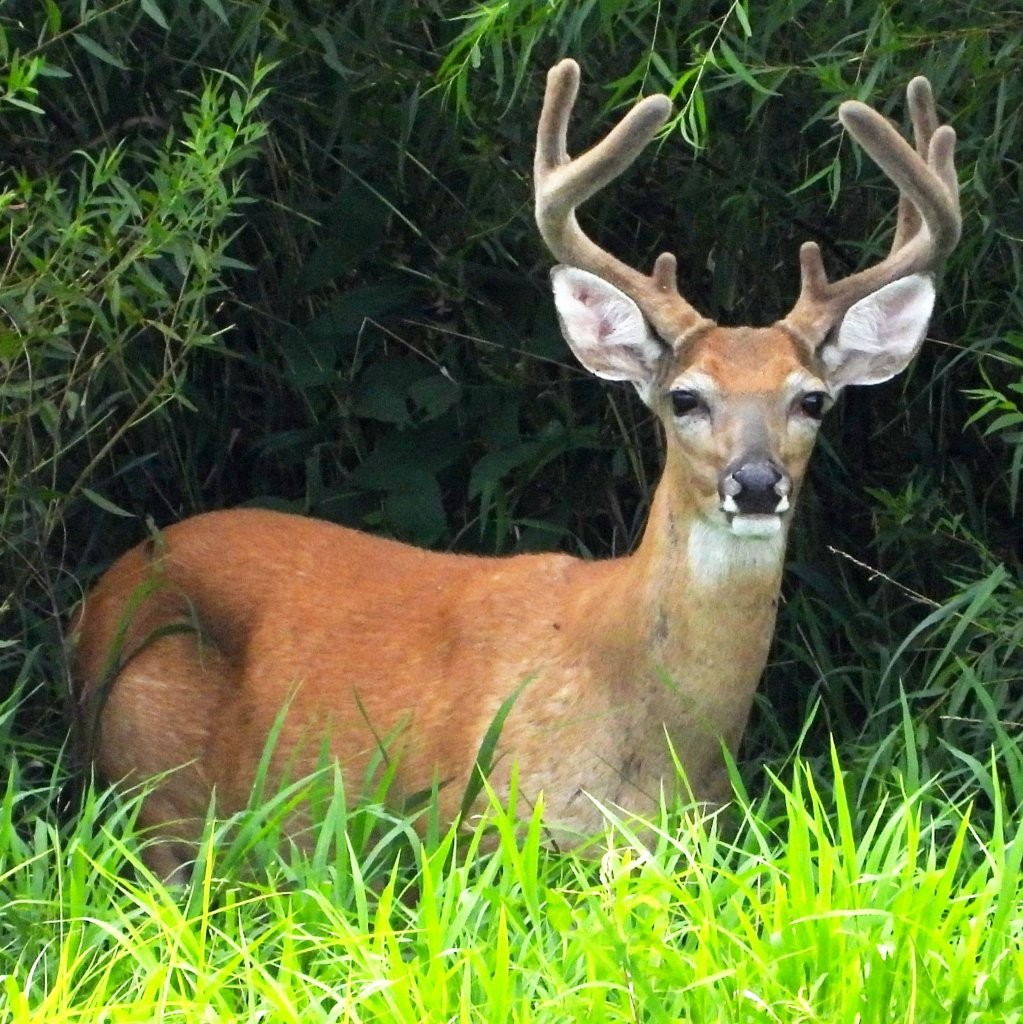
The cages are to protect these small trees from bucks, who like to rub their antlers on young, pliable trees, removing bark and potentially killing the trees. Once these trees are older, their trunks are no longer so appealing for antler rubbing, and the cages are no longer needed for that purpose. 

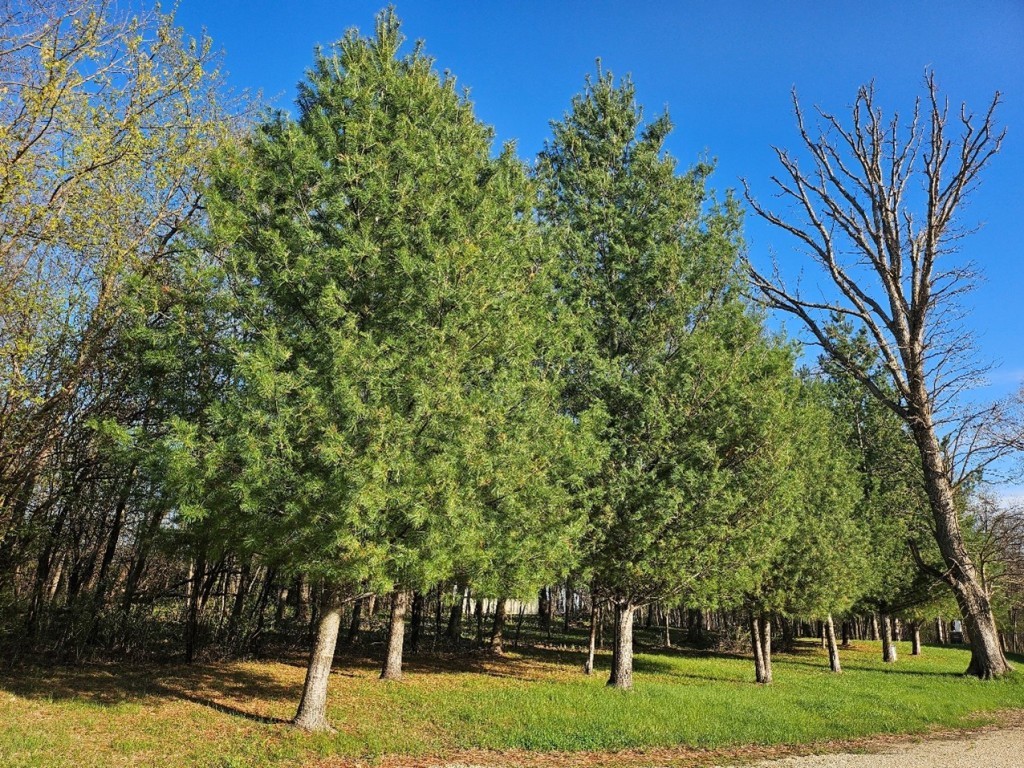
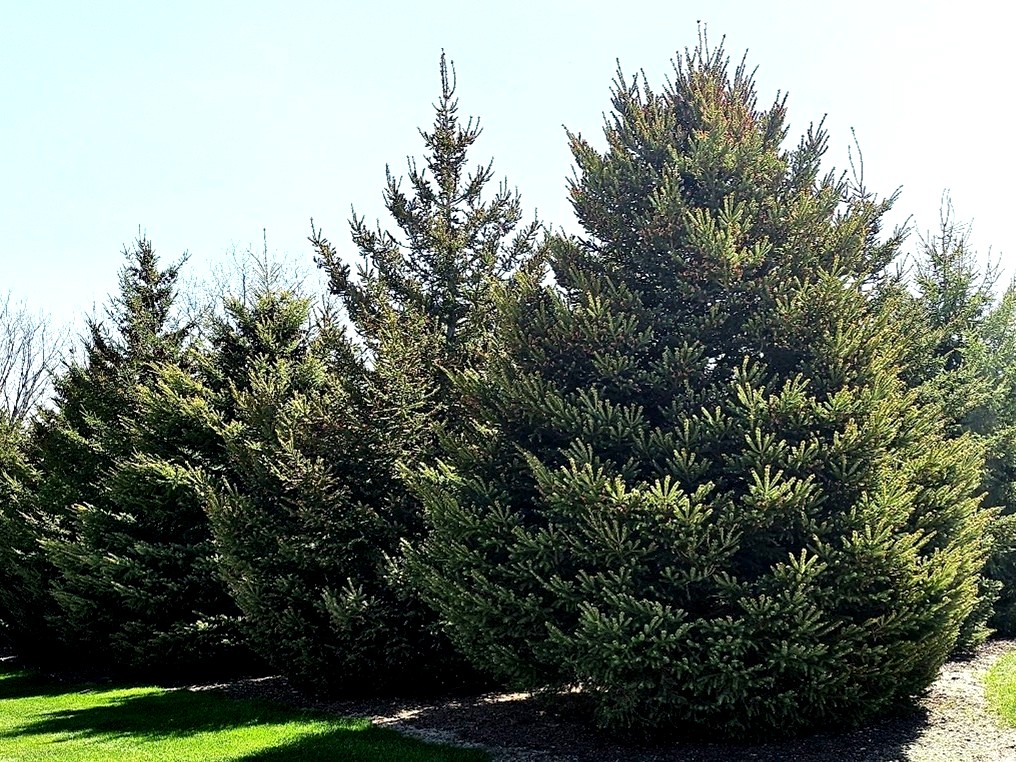
As a separate issue, deer find eastern white pines to be very tasty, so they’ll eat whatever branches they can reach. The cages are also an attempt to protect some parts of the pines from being eaten, to allow them to eventually get tall enough to have branches that are out of reach for deer browsing. White pines are native and fast-growing (2-3 ft per year or more) and will grow up to 80+ ft tall and 25 ft or more wide. They can live over 100 years in windbreaks but usually have a shorter lifespan due to breaking in wind and ice storms.

Deer are far less interested in browsing on white spruce, so hopefully these trees will retain their lower branches, but the cages are still needed initially as protection from antler rubbing. Deer do not normally eat white spruce unless they can’t find other options, such as during a particularly harsh winter with lots of snow. White spruce are medium to fast-growing (2+ ft per year) and will grow up to 60+ ft tall and 20+ ft wide. They can live 80+ years in windbreaks, and heavy snow and ice storms cause little damage.

Below are photos of mature trees for both species, where the cages were removed many years ago, to clearly show the deer browsing preference!

2024 Tree Planting Follow-up

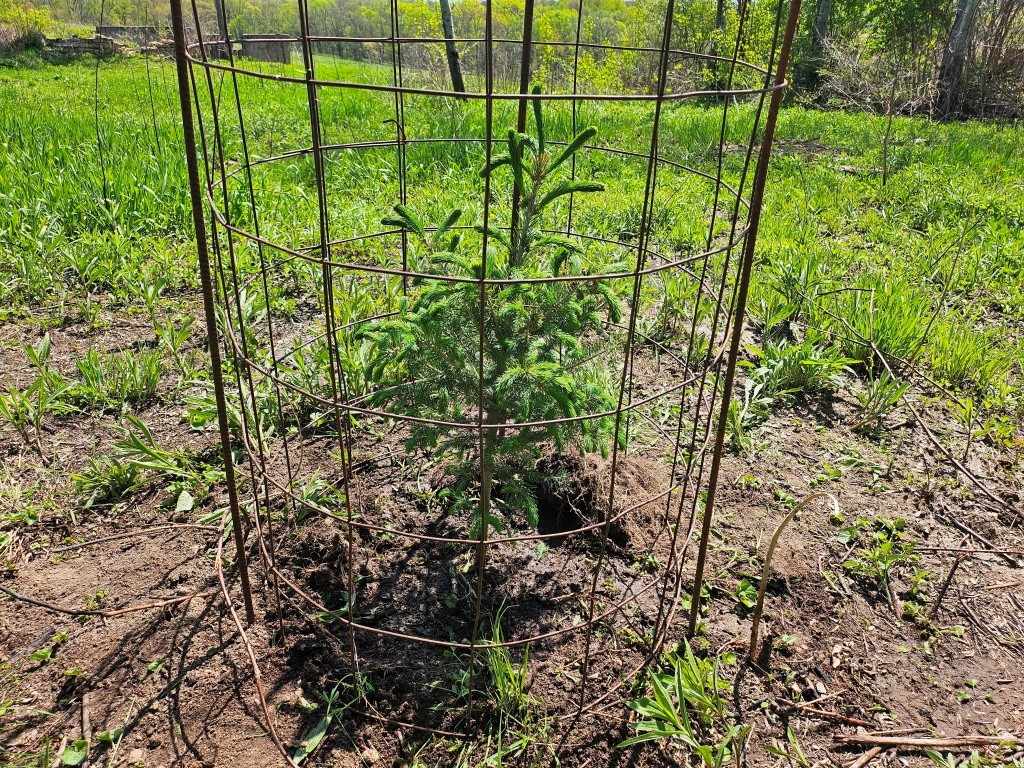
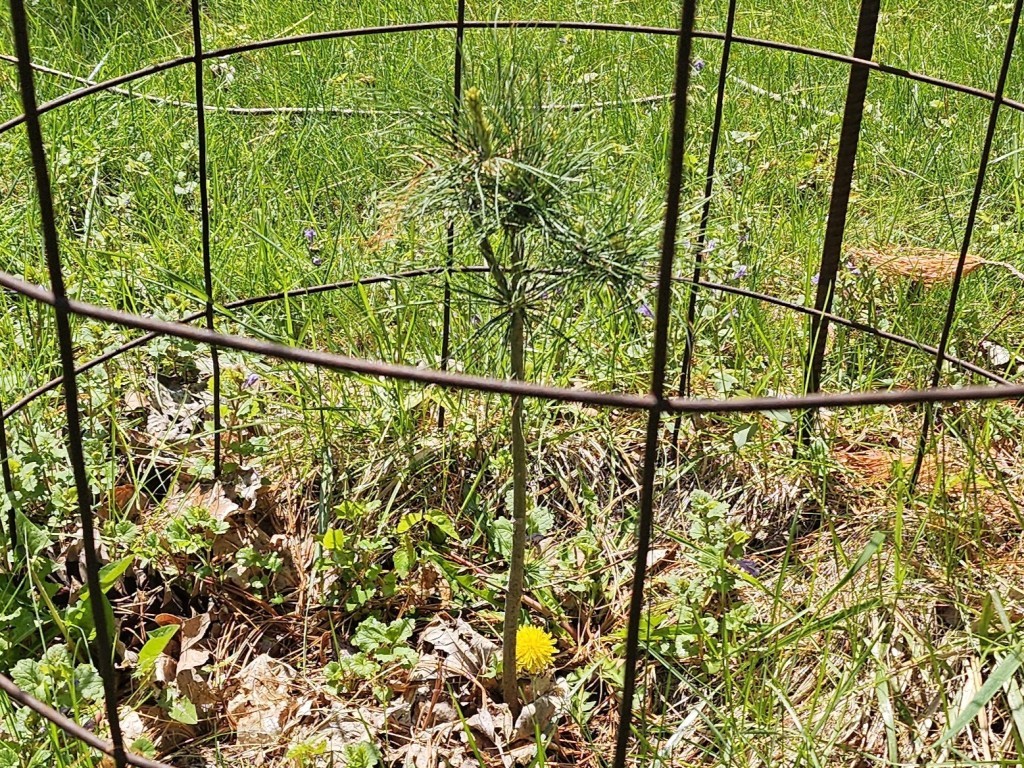
Some may recall that Dubuque Audubon planted 16 eastern white pine bare root seedlings at Mines of Spain in May 2024. One of the survivors can be found at the south entrance (see photo) near the two larger pines we just added. It may continue to struggle in shady conditions, but we hope that removing competing grass around it this year will help.

Bare Root Seedling
(Planted 4/14/24)
5/1/26
2026 Spring Species Count

BY TONY MOLINE

On Saturday, May 9, Dubuque Audubon conducted its annual spring species count. The count covered various areas in Dubuque and Jackson counties. A peer-lead group covered a large portion of mines of Spain state recreation area. 

In total, 145 species were recorded for the day.  Although overall numbers of birds were down, the number of individual species was in line with typical years.  Thank you to all who participated.

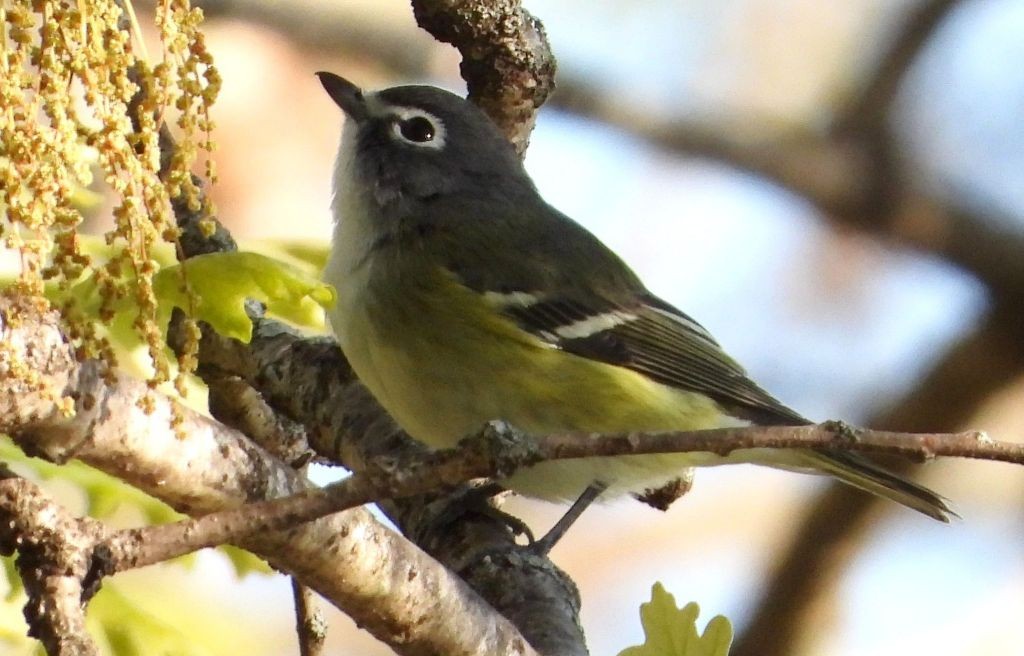
Blue-headed Vireo
© Joyce Hartig
Spring Potluck Visitor

BY MARTY CORFMAN

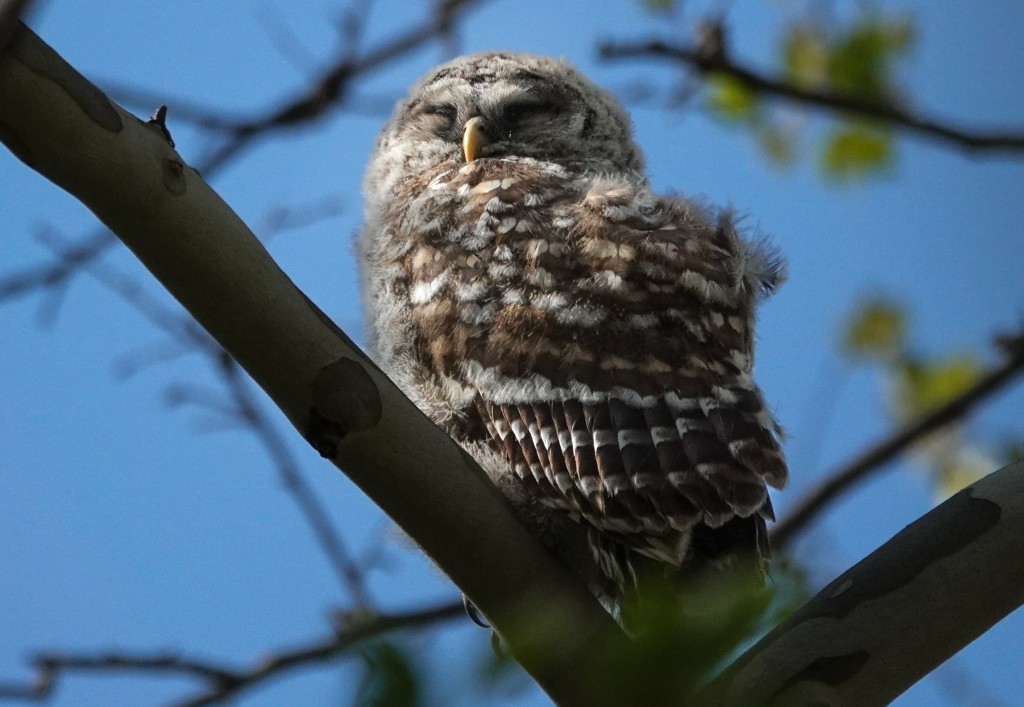
We concluded the spring count with a potluck at Swiss Valley Park. About 15 of us convened for great food, great company, and a pretty decent species count! We added one more upon arrival at the shelter for the potluckthis adorable Barred Owlet! It sat in this tree for nearly the entire gathering, allowing all of us to get good looks (and pics!) before it glided off across the creek. Its presence felt like a gift.

Barred Owl
© Marty Corfman
Potluck Visitor

5/9/26 Spring Species Count Results

  1. Canada Goose
  2. Trumpeter Swan
  3. Wood Duck
  4. Blue-winged Teal
  5. Northern Shoveler
  6. Gadwall
  7. Mallard
  8. Green-winged Teal
  9. Lesser Scaup
  10. Bufflehead
  11. Hooded Merganser
  12. Red-breasted Merganser
  13. Wild Turkey
  14. Ring-necked Pheasant
  15. Rock Pigeon
  16. Eurasian Collared-Dove
  17. Mourning Dove
  18. Chimney Swift
  19. Ruby-throated Hummingbird
  20. Sora
  21. American Coot
  22. Sandhill Crane
  23. Killdeer
  24. Semipalmated Plover
  25. Spotted Sandpiper
  26. Solitary Sandpiper
  27. Lesser Yellowlegs
  28. Willet
  29. Stilt Sandpiper
  30. Dunlin
  31. Baird’s Sandpiper
  32. White-rumped Sandpiper
  33. Least Sandpiper
  34. Pectoral Sandpiper
  35. Semipalmated Sandpiper
  36. Caspian Tern
  37. Pied-billed Grebe
  38. Double-crested Cormorant
  39. Great Egret
  40. Great Blue Heron
  41. American White Pelican
  42. Turkey Vulture
  43. Northern Harrier
  44. Bald Eagle
  45. Broad-winged Hawk
  46. Red-tailed Hawk
  47. Great Horned Owl
  48. Barred Owl
  49. Belted Kingfisher
  50. Yellow-bellied Sapsucker
  51. Red-headed Woodpecker
  52. Red-bellied Woodpecker
  53. Downy Woodpecker
  54. Hairy Woodpecker
  55. Pileated Woodpecker
  56. Northern Flicker
  57. American Kestrel
  58. Peregrine Falcon
  59. Eastern Wood-Pewee
  60. Acadian Flycatcher
  61. Willow Flycatcher
  62. Eastern Phoebe
  63. Great Crested Flycatcher
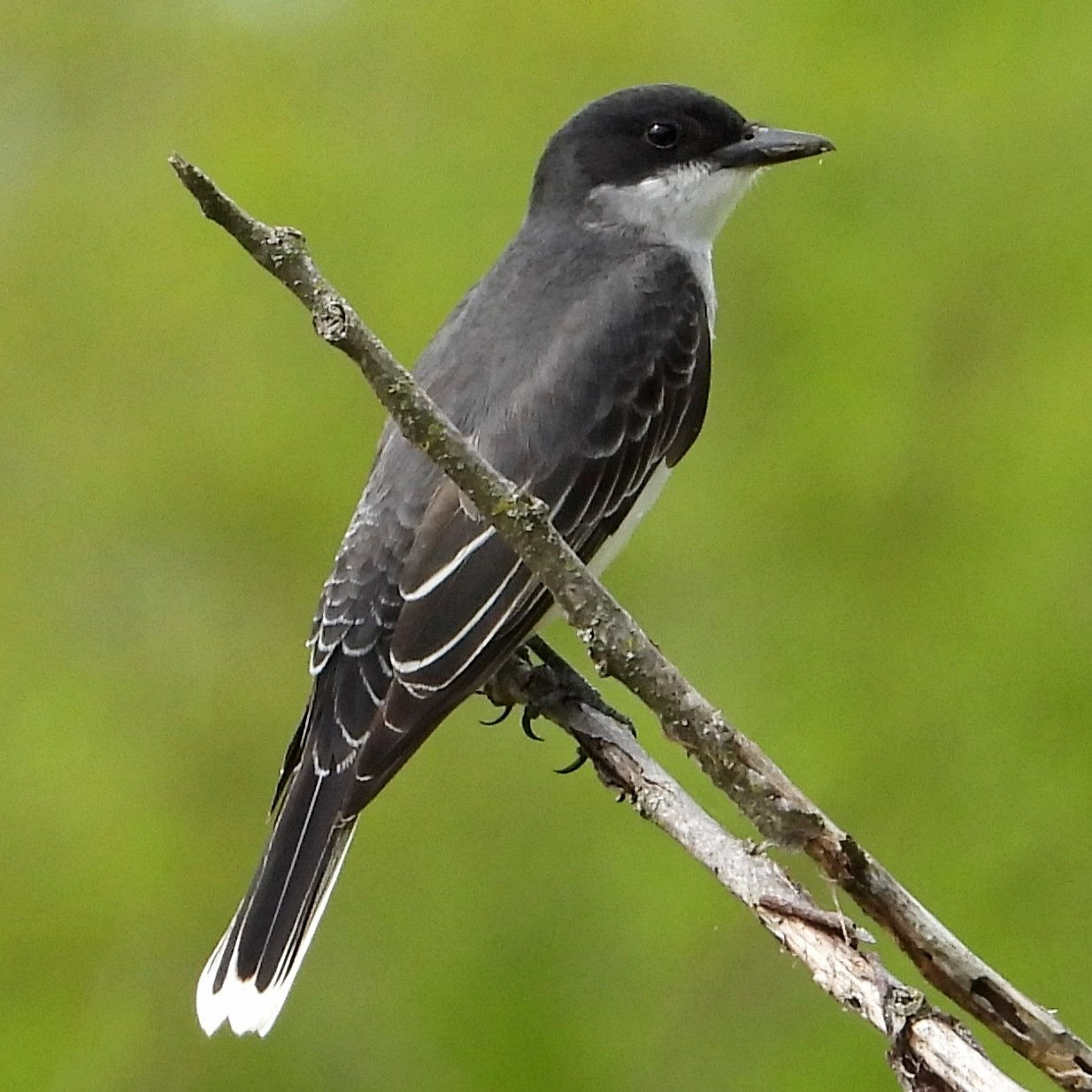
  64. Eastern Kingbird
  65. Bell’s Vireo
  66. Yellow-throated Vireo
  67. Blue-headed Vireo
  68. Eastern Warbling Vireo
  69. Red-eyed Vireo
  70. Blue Jay
  71. American Crow
  72. Black-capped Chickadee
  73. Tufted Titmouse
  74. Horned Lark
  75. Tree Swallow
  76. Purple Martin
  77. Northern Rough-winged Swallow
  78. Barn Swallow
  79. Cliff Swallow
  80. Ruby-crowned Kinglet
  81. White-breasted Nuthatch
  82. Red-breasted Nuthatch
  83. Brown Creeper
  84. Blue-gray Gnatcatcher
  85. Northern House Wren
  86. Marsh Wren
  87. Carolina Wren
  88. European Starling
  89. Gray Catbird
  90. Brown Thrasher
  91. Eastern Bluebird
  92. Veery
  93. Gray-cheeked Thrush
  94. Swainson’s Thrush
  95. Wood Thrush
  96. American Robin
  97. House Sparrow
  98. Eurasian Tree Sparrow
  99. House Finch
  100. Purple Finch
  101. American Goldfinch
  102. Grasshopper Sparrow
  103. Chipping Sparrow
  104. Field Sparrow
  105. Lark Sparrow
  106. White-crowned Sparrow
  107. White-throated Sparrow
  108. Vesper Sparrow
  109. Savannah Sparrow
  110. Song Sparrow
  111. Lincoln’s Sparrow
  112. Swamp Sparrow
  113. Eastern Towhee
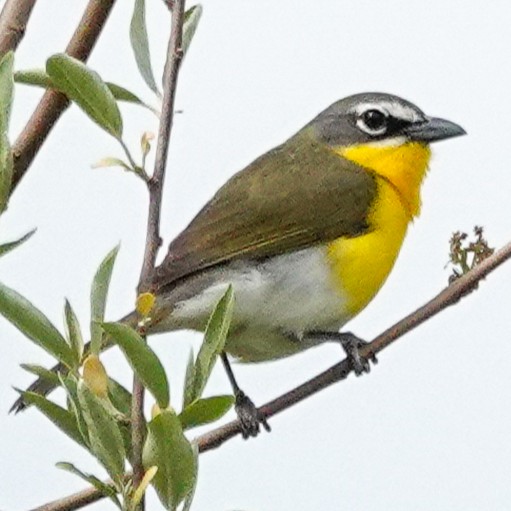
  114. Yellow-breasted Chat
  115. Bobolink
  116. Eastern Meadowlark
  117. Orchard Oriole
  118. Baltimore Oriole
  119. Red-winged Blackbird
  120. Brown-headed Cowbird
  121. Common Grackle
  122. Northern Waterthrush
  123. Golden-winged Warbler
  124. Blue-winged Warbler
  125. Black-and-white Warbler
  126. Prothonotary Warbler
  127. Tennessee Warbler
  128. Orange-crowned Warbler
  129. Nashville Warbler
  130. Common Yellowthroat
  131. American Redstart
  132. Cape May Warbler
  133. Cerulean Warbler
  134. Northern Parula
  135. Magnolia Warbler
  136. Bay-breasted Warbler
  137. Northern Yellow Warbler
  138. Blackpoll Warbler
  139. Palm Warbler
  140. Yellow-rumped Warbler
  141. Black-throated Green Warbler
  142. Scarlet Tanager
  143. Northern Cardinal
  144. Rose-breasted Grosbeak
  145. Indigo Bunting
Our Newest Board Member

BY PAUL WINER

After a career in manufacturing that did not allow much time to pursue outdoor activities and hobbies, I have spent my retirement doing the things that I had pushed to the back of my thoughts. Woodworking has been a long-time hobby that I spent a lot of time pursuing, and for a number of years was my primary focus. My current involvement in photography started out as a sideline to woodworking, to get outside and expand my activities. I became a member of the Dubuque Audubon Society after being asked to give a presentation on the Crescent Lake National Wildlife Refuge in October of 2025. 

Working with extremely knowledgeable wildlife experts and enthusiasts has been very challenging and rewarding. It has expanded my activities and contacts with people that have similar interests. I am also an active member of the Stewards of the Upper Mississippi River Refuge—a “friends group” for the Upper Mississippi River National Wildlife and Fish Refuge, Savanna District.

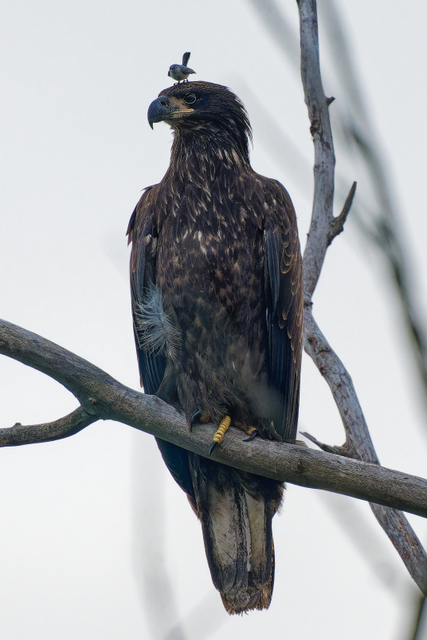
Bald Eagle with Blue-gray Gnatcatcher
Upper Mississippi Refuge
7/8/24
© Paul Winer
Thank You & Motus Update

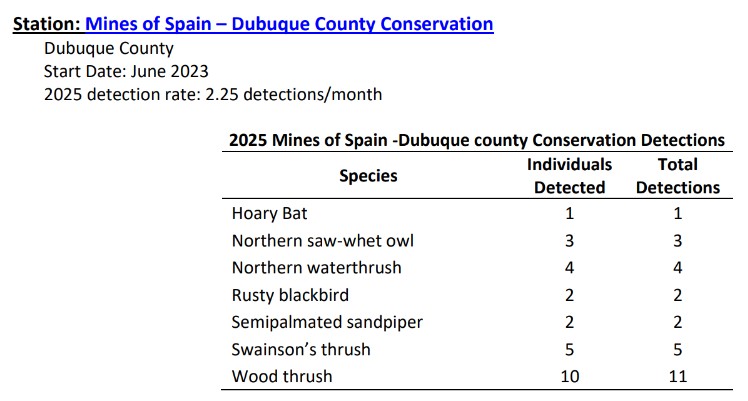
Kaytlan Moeller, Outreach Coordinator for Dubuque County Conservation, shared the annual Motus report from Anna Buckardt Thomas, Avian Ecologist, Wildlife Research Section, Department of Natural Resources along with a thank you for our support in the financing of the Motus system at the EB Lyons Nature Center at the Mines of Spain. She said that the system has had some interesting discoveries, including one of the only bats detected with a Motus system in Iowa!

The Motus Wildlife Tracking System is a collaborative global network of automated radio telemetry receivers for tracking small migratory wildlife that have been tagged.

See Iowa’s Motus Wildlife Tracking Network 2025 Annual Report for complete details.

CHAPTER LEADERSHIP

OFFICERS

President: Marty Corfman

Vice President: Ken Kiss

Treasurer: Andrea Pellerito

Secretary: Kari Zelinskas

BOARD MEMBERS

  • Mary Leigh (Web Admin)
  • Tony Moline
  • Maggie O’Connell
  • Lori Ollendick
  • Bob Walton (Iowa Audubon Liaison)
  • Sandy Walton
  • Paul Winer

COMMITTEE CHAIRS

Membership: Mary Leigh

Program: Bob & Sandy Walton

Field Trips & Volunteer Opportunities: Tony Moline

Conservation: [open position]

Publicity: Marty Corfman

Newsletter: Marty Corfman, Mary Leigh

Technology: Lori Ollendick